
The crime scene discovery remains fiction’s most overwritten moment, where promising narratives collapse under the weight of their own theatrical ambition.
Too many crime writers mistake volume for impact, drowning their most crucial scenes in purple prose and emotional excess. The most effective crime scene discoveries operate through restraint, building tension through what remains unsaid rather than what’s explicitly described. Master this balance between vivid detail and understated horror, and you’ll create moments that haunt readers long after they’ve closed the book. Fail, and your carefully constructed narrative becomes another victim of literary melodrama.
The Principles of Effective Scene Discovery
The Power of Selective Detail
Amateur writers invariably show too much. They catalog every wound, describe every pool of blood, and exhaust readers with forensic minutiae that serves no narrative purpose. Professional crime fiction understands that suggestion trumps exposition every time. The human imagination, properly guided, creates far more disturbing images than any writer can describe.
Consider how Louise Penny approaches murder scenes in her Inspector Gamache series. Rather than dwelling on graphic violence, she focuses on incongruity—the victim’s reading glasses still perched on their nose, the half-finished crossword puzzle beside the body. These details disturb precisely because they emphasize the interruption of ordinary life, making death more unsettling than any anatomical description could achieve.
The Senses Beyond Sight
Novice writers lean heavily on visual description, forgetting that crime scenes assault all five senses. The most convincing discoveries engage hearing, smell, and touch in ways that create visceral reader responses without resorting to gore. The silence that feels wrong. The metallic scent that shouldn’t be there. The unexpected warmth or coldness of surfaces.
Sound deserves particular attention. Crime scenes possess distinctive audio signatures—the buzz of flies, the drip of liquids, the creak of disturbed floorboards, or most unnervingly, the complete absence of expected sounds. Writers who master these auditory details create atmospheric tension that visual description alone cannot match.
The Emotional Gradient
Perhaps the most crucial element separating professional crime writing from amateur attempts is the management of emotional escalation. Skilled authors understand that shock requires setup—readers must feel secure before that security is shattered. This means establishing normalcy before revealing horror, building anticipation before delivering revelation.
The detective’s or protagonist’s emotional journey through the discovery must feel authentic without becoming overwrought. Professional investigators develop coping mechanisms that amateur sleuths lack, but even seasoned characters can be disturbed by particularly unusual or personal crime scenes. The key lies in showing this emotional response through action and physical reaction rather than internal monologue or explicit emotional statements.
Common Pitfalls That Destroy Credibility
The Grocery List Fallacy
Beginning writers often approach crime scenes like inventory clerks, listing every visible detail without consideration for narrative impact or reader engagement. This catalog approach destroys pacing and dulls the emotional impact that crime scene discoveries should provide. Effective crime writing selects details that serve multiple purposes—advancing plot, revealing character, or building atmosphere.
Each described element should earn its place through relevance to the investigation, insight into the victim or perpetrator, or contribution to the scene’s emotional weight. Everything else represents narrative deadweight that weakens the overall impact.
The Shock Value Trap
Writers desperate to create memorable scenes often resort to increasingly extreme violence or bizarre staging, mistaking sensationalism for sophistication. This approach backfires spectacularly, creating scenarios so outlandish they pull readers out of the narrative entirely. True horror emerges from believable situations gone wrong, not from elaborate torture scenarios that belong in horror fiction rather than crime narratives.
The most disturbing crime scenes in literature often involve relatively simple violence made terrible through context, timing, or emotional significance. The murder of a beloved character affects readers more than the elaborate execution of someone they’ve barely met, regardless of the comparative gore involved.
The Emotional Overload Error
Inexperienced writers frequently have their characters react with emotional intensity inappropriate to their backgrounds or the situation. Seasoned detectives who’ve seen hundreds of crime scenes shouldn’t respond like civilian witnesses encountering their first corpse. Conversely, ordinary people thrust into extraordinary circumstances deserve realistic shock responses that don’t veer into theatrical territory.
The key lies in understanding that different characters process trauma differently, and these responses should reflect their personalities, backgrounds, and relationships to the victim. A detective’s professional detachment might crack when investigating a case that parallels their own life, while a civilian might surprise themselves with their ability to compartmentalize in crisis situations.
Technical Considerations That Matter
Pacing and Revelation
Crime scene discoveries work best when information emerges gradually rather than through immediate exposition. Consider how readers will process each piece of information and arrange revelations for maximum impact. The most important details shouldn’t necessarily come first—sometimes the smallest, most personal element discovered last carries the greatest emotional weight.
This graduated revelation serves multiple narrative functions. It mimics how real investigations unfold, with understanding developing over time rather than arriving instantly. It also allows for multiple emotional beats within a single scene, preventing the one-note impact that characterizes weaker crime writing.
Point of View Consistency
Crime scene discoveries must remain faithful to the chosen point of view character’s knowledge, experience, and emotional state. A civilian narrator shouldn’t possess forensic knowledge they haven’t acquired through the narrative, just as a professional investigator shouldn’t miss obvious details that their training would highlight.
This consistency extends beyond technical knowledge to emotional responses and observational priorities. Different characters will notice different aspects of the same scene based on their backgrounds, concerns, and psychological makeup. A parent might focus on evidence suggesting the victim’s family situation, while a forensic specialist might immediately catalog physical evidence.
The Aftermath: What Happens Next
Many writers excel at the discovery moment but fumble the immediate aftermath, when the scene’s impact should ripple through subsequent narrative elements. The crime scene discovery isn’t an isolated set piece—it’s a catalyst that should influence character development, plot progression, and thematic exploration throughout the remaining story.
Professional crime writers understand that the best discoveries raise more questions than they answer, propelling the investigation forward while deepening character relationships and revealing new information about the criminal, victim, or investigator. Amateur writers too often treat the discovery as a conclusion rather than a beginning, missing opportunities for sustained narrative development.
The most effective crime scene discoveries also establish the stakes for the remainder of the story. They should clarify what the protagonist is fighting against, what they’re trying to protect, and what failure might cost. Without these elements, even the most skillfully written discovery scene becomes mere spectacle rather than meaningful narrative development.
Learning from the Masters
Study how established crime writers handle these crucial scenes, paying particular attention to what they choose not to describe rather than what they include. Notice how writers like Tana French use crime scene discoveries to explore character psychology, or how Michael Connelly balances procedural detail with emotional impact.
The best crime scene discoveries in literature succeed because they serve the story rather than dominating it. They provide necessary information while advancing character development, establish mood without overwhelming plot progression, and create emotional impact without sacrificing believability. Master this balance, and your crime scenes will achieve the sophisticated restraint that separates professional fiction from amateur attempts.
Discover Phillip Strang
Strang’s crime series demonstrate masterful restraint in crime scene discoveries, building tension through atmospheric detail rather than graphic sensationalism. His procedural expertise ensures authenticity without sacrificing narrative momentum.
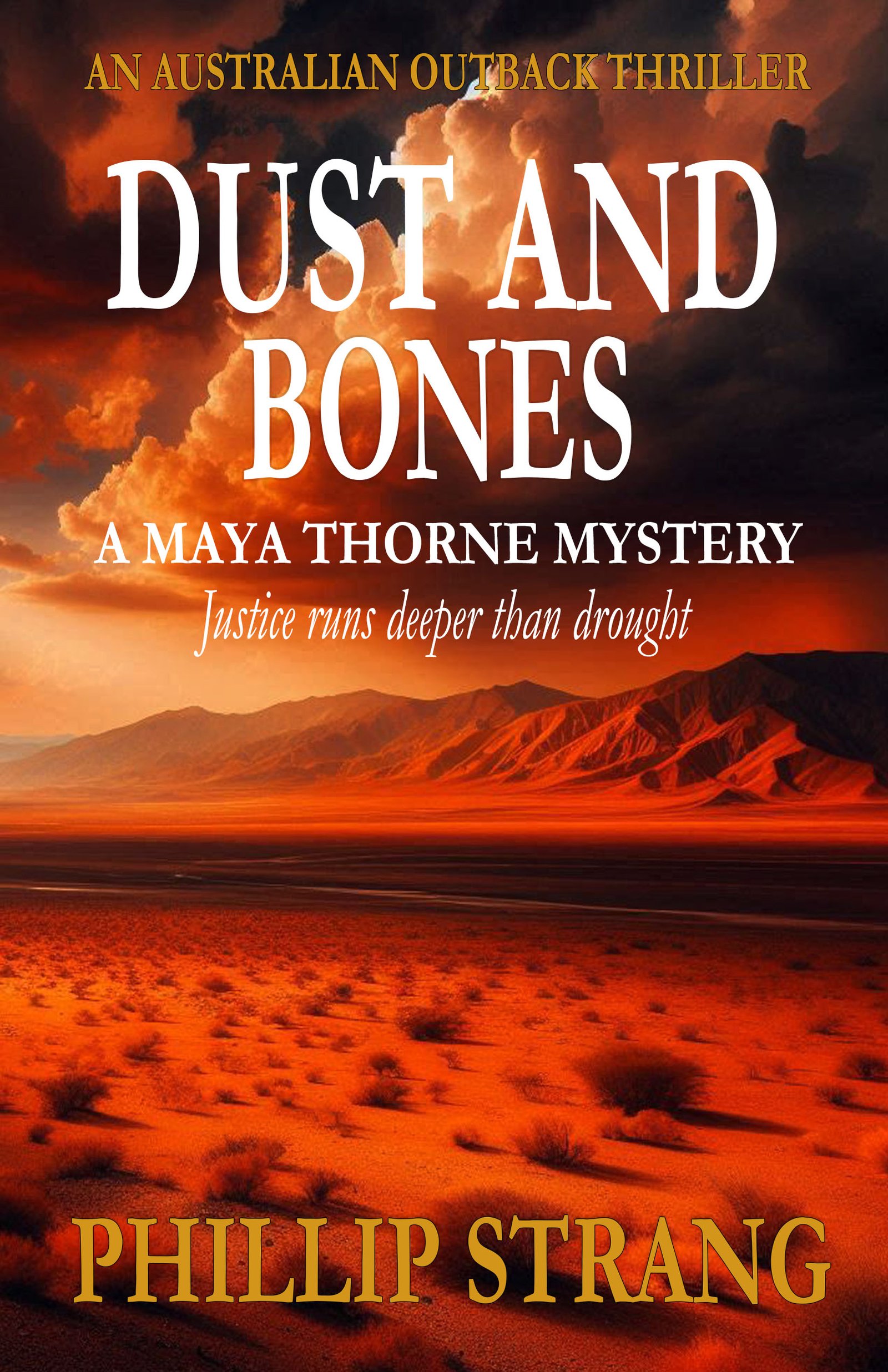
A MAYA THORNE MYSTERY
Get Dust and Bones Free
Justice runs deeper than drought.
Red dust. Shallow graves. A detective who hunts killers where the law runs thin and the nearest help is two hundred miles away.
Send Me the BookYou'll also receive occasional new release emails. Unsubscribe anytime. No spam, ever.