
Writing the Opening Chapter of a Crime Novel: Hooks That Actually Work
The opening chapter of a crime novel carries the entire weight of reader engagement, and most writers get it catastrophically wrong. They either dump backstory like concrete or manufacture tension so artificially that readers smell the desperation from page one.
Across eighteen series and more than 150 novels, I have found that effective crime novel openings operate on a completely different principle than what most writing advice suggests. They don’t hook through shock value or mystery boxes—they hook through immediate competence and inevitable consequence.
The Competence Principle in Crime Openings
Every successful crime novel opening demonstrates competence within the first few paragraphs. Not the competence of perfect characters, but the competence of the author handling the genre machinery. When I open a DCI Isaac Cook novel with a body discovery, I’m not trying to surprise readers with gore or puzzle them with cryptic clues. I’m showing them that I understand how police procedure actually works, how crime scenes function, and how professional investigators think.
Take the opening of any solid police procedural—the competence shows in the details that ring true rather than the ones that shock. The way a detective notices the positioning of a victim’s hands, the automatic assessment of scene contamination, the internal calculation of jurisdictional issues. These elements signal to crime readers that they’re in capable hands for the duration of the investigation.
This competence principle extends beyond police procedurals. In espionage thrillers, competence manifests in understanding operational security, tradecraft, and the genuine psychology of intelligence work. In psychological thrillers, it appears through authentic insight into damaged minds and realistic therapy dynamics. Readers of crime fiction are sophisticated—they know when you’re faking it.
How I Actually Approach Opening Chapters
When I sit down to write the opening chapter of any new book, I start with a single question: what does my protagonist need to prove about themselves in the next twenty pages? Not what they need to learn or discover or overcome—what they need to prove they already know how to do. This approach has guided me through the best police procedural novels in my catalog and the most successful entries in my thriller series.
For DI Tremayne, that proof might be his ability to read a crime scene that has everyone else baffled. For Maya Thorne in the Australian outback, it’s her capacity to navigate both the harsh landscape and the even harsher human dynamics of isolated communities. The competence they demonstrate creates reader confidence, and reader confidence creates page-turning momentum more reliably than any artificial cliffhanger.
I write the opening scene three different ways before choosing one. First version: pure action or incident. Second version: character establishment through routine disrupted. Third version: the problem arriving at the protagonist’s door. The version that makes it into the final book is whichever one best demonstrates character competence while establishing the story’s central engine.
The Inevitable Consequence Structure
The strongest crime novel openings don’t just present an incident—they present an incident that makes everything else in the book inevitable. This isn’t about foreshadowing or hints. It’s about establishing a situation that, given the characters involved, can only unfold in escalating ways. When readers feel this inevitability, they keep reading not because they’re confused but because they’re convinced.
Consider how this works in practice. A detective with a reputation for obsessive case-solving encounters a murder that mirrors an unsolved case from their past. The inevitability isn’t mysterious—it’s psychological. Given what we learn about this detective in chapter one, they cannot possibly let this connection go uninvestigated. Readers aren’t hooked by wondering what will happen; they’re hooked by anticipating how intensely it will happen.
This structure eliminates the problem of sagging middles that plague crime novels with artificially mysterious openings. When your opening chapter establishes inevitable consequence rather than arbitrary mystery, every subsequent chapter feels necessary rather than delayed gratification. The momentum becomes structural rather than manufactured.
Common Opening Chapter Mistakes That Kill Momentum
The most destructive mistake I see in crime novel openings is the red herring prologue—usually a victim’s point of view right before their murder, designed to create false intimacy and manufactured suspense. These openings almost never work because they promise a book about the victim when the actual book is about the investigator. The emotional investment readers make in chapter one becomes worthless by chapter three.
Equally damaging is the backstory dump disguised as character introduction. Writers think they’re establishing their detective by showing us their morning routine, their relationship problems, their psychological damage from previous cases. But crime readers don’t want to meet your detective having breakfast—they want to meet your detective being excellent at detective work. The personal stuff earns its relevance only after professional competence is established.
The false urgency opening represents another category of momentum-killer. This involves starting with dramatic action—a chase scene, a confrontation, a crisis—that turns out to be either a training exercise, a memory, or completely unrelated to the main plot. Readers feel manipulated rather than engaged. They came for crime fiction, not bait-and-switch techniques borrowed from action thriller novels where such openings might actually serve the story.
Dialogue That Does Double Duty
The dialogue in crime novel opening chapters must work twice as hard as dialogue anywhere else in the book. It needs to sound authentic to the professional world you’re depicting while simultaneously revealing character dynamics and advancing plot mechanics. Most writers fail at this because they make their dialogue serve only one purpose at a time.
Professional dialogue in crime fiction isn’t about how real cops or real agents actually talk—it’s about how they talk when the conversation matters to the case. The rhythm, the assumptions, the things left unsaid because everyone in the room already knows them. When DCI Isaac Cook discusses a case with his team, the dialogue reveals hierarchy, expertise, and personality through what each character considers worth stating explicitly.
Effective crime dialogue also establishes the stakes without anyone directly announcing them. Characters discuss procedure, evidence, and logistics, but the emotional and professional consequences emerge through subtext. A detective who interrupts colleagues reveals different information than one who listens carefully. These patterns, established in chapter one, become the foundation for character development throughout the entire book.
Conclusion
The opening chapter of a crime novel succeeds when it demonstrates author and character competence while establishing inevitable consequences that drive the entire narrative. Everything else—the hooks, the mysteries, the tension—flows naturally from these fundamental elements rather than being artificially constructed to grab attention.
About Phillip Strang
Phillip Strang is the author of eighteen crime, thriller, and espionage series spanning more than 150 novels, including the DCI Isaac Cook London police procedurals, the DI Tremayne investigations, and the Maya Thorne series set in the Australian outback. Explore his books.
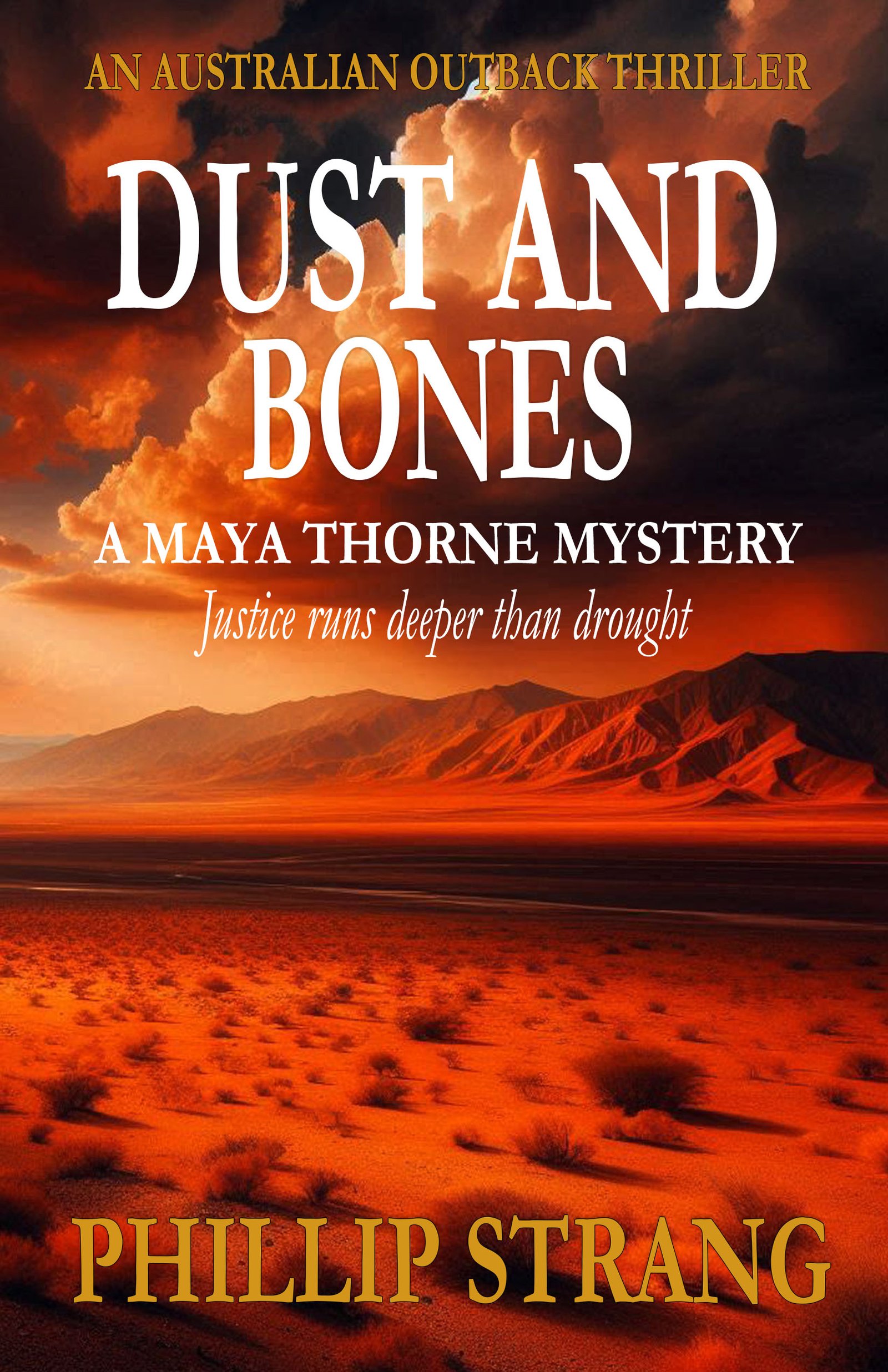
A MAYA THORNE MYSTERY
Get Dust and Bones Free
Justice runs deeper than drought.
Red dust. Shallow graves. A detective who hunts killers where the law runs thin and the nearest help is two hundred miles away.
Send Me the BookYou'll also receive occasional new release emails. Unsubscribe anytime. No spam, ever.