
The suspect interview conducted outside the formal confines of a police station presents unique narrative opportunities that many crime writers leave unexplored. Unlike the controlled environment of an interview room with its recording equipment and legal protections, the informal interrogation strips away procedural safety nets and creates a raw dynamic between investigator and suspect.
These encounters demand a different approach to both dialogue and scene construction. Across eighteen series and more than 150 novels, I have found that the informal suspect interview often produces the most memorable confrontations in crime fiction, precisely because both parties operate without the usual constraints.
The Psychology of Uncontrolled Space
When you move an interview outside the station, you immediately shift the power dynamic. The suspect is no longer in custody, which means they can walk away, refuse to answer, or even become aggressive. This uncertainty creates natural tension that translates directly to the page. In my DCI Isaac Cook series, some of the most effective interrogations happen in car parks, pubs, or on the suspect’s doorstep, where Cook must rely on psychological pressure rather than legal authority.
The physical environment becomes a character in these scenes. A conversation in a suspect’s own home gives them territorial advantage, while cornering someone in a public space adds the pressure of potential witnesses. I use these environmental factors to influence how characters speak and behave. A suspect who might clam up in an interview room may become cocky on their own turf, revealing more than they intend.
The investigator’s approach must also adapt. Without the formal structure of a recorded interview, they can employ tactics that would be inappropriate in an official setting. This includes reading body language more closely, using environmental cues to their advantage, and applying psychological pressure through timing and location choice.
Dialogue Without Safety Rails
Formal interviews follow established patterns with legal requirements and procedural language. Informal conversations allow for more natural speech patterns, but this freedom creates its own challenges for the writer. The dialogue must sound authentic while still serving the story’s investigative purpose.
I structure these conversations to feel organic while maintaining forward momentum. Characters interrupt each other, change subjects abruptly, and use subtext more heavily than they would in formal questioning. The investigator might approach topics sideways, building rapport before striking with the crucial question. This requires careful pacing to prevent the scene from meandering.
The absence of Miranda rights or formal cautions means characters can speak more freely, but it also means anything they say carries less legal weight. This paradox creates interesting story possibilities. A suspect might confess to something in an informal setting, only to deny it later when faced with official questioning. These contradictions drive plot development and character complexity.
Physical actions become more important in informal settings. Characters can smoke, drink, pace, or engage in other activities while talking. These actions reveal character and create natural pauses in dialogue. A suspect who offers tea is sending a different message than one who answers questions while cleaning a gun.
How I Approach the Informal Interrogation
My process for writing these scenes begins with location selection. I choose settings that serve the story’s emotional purpose rather than mere convenience. A graveyard conversation carries different weight than one in a crowded café. The location must feel justified within the plot while providing the right atmosphere for the confrontation.
I plan the investigator’s strategy before writing the dialogue. What do they hope to achieve? Are they fishing for information, testing a theory, or trying to provoke a reaction? This goal shapes every line of dialogue and determines the scene’s pacing. In my Maya Thorne series, the vast Australian outback provides isolation that makes these encounters more intense and potentially dangerous.
The suspect’s motivation is equally important. Why are they agreeing to talk? Are they confident in their innocence, trying to mislead the investigation, or attempting to gauge how much the police know? This underlying motivation influences their responses and determines when they might become evasive or aggressive.
I write these scenes with particular attention to power shifts. The balance between investigator and suspect changes throughout the conversation based on what information emerges. A confident suspect might become defensive when presented with unexpected evidence, while a nervous one might gain confidence if they realize the investigator is fishing.
Common Pitfalls in Informal Interview Scenes
Many writers fall into the trap of making informal interviews too easy for their investigators. Without procedural constraints, they have characters extracting information too readily, destroying believability. A street-smart criminal would not voluntarily incriminate themselves just because a detective asked nicely outside a police station.
Another frequent mistake involves ignoring the legal implications of informal questioning. While these conversations allow more freedom, they also provide less protection for both parties. Smart suspects would be aware of this, and experienced investigators would know the limitations of evidence gathered informally. Characters should behave according to their understanding of these realities.
Pacing problems plague many informal interview scenes. Writers either rush through them to get to action sequences or drag them out with repetitive questioning. The key is maintaining tension through character dynamics rather than relying solely on information exchange. A well-written informal interview reveals character as much as plot details.
Environmental details often get overlooked in favor of dialogue, but the setting should actively contribute to the scene’s effectiveness. Weather, noise levels, privacy concerns, and physical comfort all influence how characters behave. Ignoring these factors results in conversations that could happen anywhere, wasting the opportunity that location provides.
Some writers make the mistake of having suspects reveal too much too easily, forgetting that people generally protect themselves even in informal settings. Real people, guilty or innocent, typically provide minimal information when questioned by police. The art lies in showing how skilled investigators extract information despite this natural resistance.
Building Tension Through Uncertainty
The most effective informal interviews exploit the uncertainty inherent in uncontrolled environments. Both investigator and suspect operate without clear boundaries, creating opportunities for the unexpected. This uncertainty should permeate every aspect of the scene, from dialogue to physical description.
I use interrupted conversations, unexpected arrivals, and environmental distractions to maintain tension. A suspect might be more forthcoming until their lawyer arrives, or an investigator might have to abandon a promising line of questioning when backup calls for assistance. These interruptions feel natural while serving the story’s pacing needs.
The threat of escalation always lurks beneath informal interviews. Without the safety of a controlled environment, conversations can become confrontations quickly. This potential for violence, even if never realized, adds edge to seemingly mundane exchanges. Characters aware of this possibility behave differently than they would in safe spaces.
Time pressure works differently in informal settings. Rather than the artificial constraints of booking procedures or lawyer availability, these scenes operate under more organic pressures. A suspect might need to collect children from school, or an investigator might be working unofficial hours. These natural deadlines create urgency without feeling contrived.
The best informal interviews leave both characters changed by the encounter. The investigator gains insight not just into the case but into human nature, while the suspect realizes their situation is more serious or complex than they initially understood. This mutual impact elevates the scene beyond mere information exchange to meaningful character development. Understanding this dynamic is crucial for writers focused on police procedural novels where character growth drives the series forward.
Conclusion
The informal suspect interview represents crime writing at its most psychologically complex, stripping away procedural protections to reveal raw human dynamics. When executed skillfully, these scenes become turning points that reshape both plot and character understanding, proving that sometimes the most important conversations happen far from the interview room.
About Phillip Strang
Phillip Strang is an Australian crime and thriller novelist. Across eighteen series and more than 150 novels, his work spans London police procedurals (DCI Isaac Cook), UK investigations (DI Tremayne), Australian outback crime (Maya Thorne), FBI thrillers (Alex Harlan), Scottish Highland mysteries (DI Sarah Lynch), and espionage (Steve Case). Learn more about Phillip or browse his complete catalogue on Amazon.
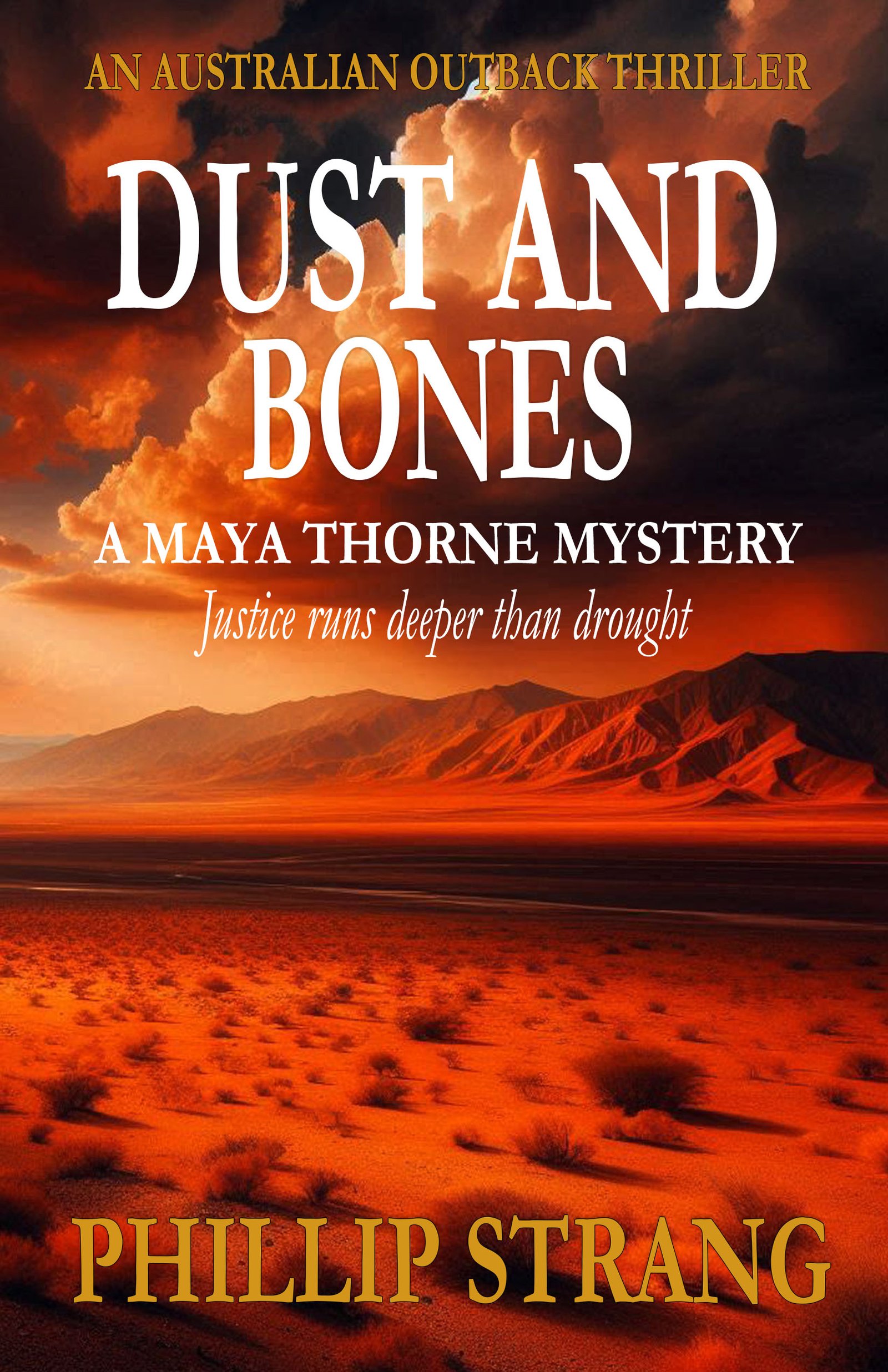
A MAYA THORNE MYSTERY
Get Dust and Bones Free
Justice runs deeper than drought.
Red dust. Shallow graves. A detective who hunts killers where the law runs thin and the nearest help is two hundred miles away.
Send Me the BookYou'll also receive occasional new release emails. Unsubscribe anytime. No spam, ever.
As an Amazon Associate, Phillip Strang earns from qualifying purchases. This page contains affiliate links — buying through them costs you nothing extra.