
The moment your detective draws their weapon or confronts physical violence, you’re walking a tightrope between authenticity and exploitation. Too little violence and your police procedural lacks credibility; too much and you’ve written torture porn masquerading as crime fiction.
Across eighteen series and more than 150 novels, I’ve found that writing violence in police procedurals requires surgical precision—every act must advance character, plot, or investigation. Violence without consequence is violence without purpose, and readers of quality police procedurals expect both authenticity and restraint.
Violence as Investigation Tool, Not Spectacle
The best procedural violence reveals character under pressure while advancing the investigation. When DCI Isaac Cook faces a knife-wielding suspect in a London alley, the violence serves three masters: it tests Cook’s resolve, provides crucial evidence about the perpetrator’s desperation, and shifts the investigation’s trajectory. The physical confrontation lasted two pages, but its consequences echoed through the entire novel.
This approach separates procedural violence from action thriller violence. In procedurals, violence interrupts the methodical pace deliberately. It’s the moment when careful police work collides with human desperation or criminal ruthlessness. Your detective doesn’t seek violence—it finds them despite their training, protocols, and preferences for orderly investigation.
Consider the aftermath as carefully as the action itself. Real police officers file reports, undergo counseling, face internal investigations after violent encounters. Your fictional detective should experience similar consequences, even if compressed for narrative efficiency. The violence changes them, affects their relationships, influences their judgment in subsequent scenes.
The Authentic Weight of Consequences
Violence in police work carries institutional weight that extends beyond the individual officer. When DI Tremayne uses force during an arrest, it triggers a cascade of procedural requirements: witness statements, supervisor reviews, potential media attention, legal ramifications. These consequences aren’t bureaucratic padding—they’re story opportunities that ground your narrative in authentic police experience.
Physical violence leaves psychological scars that skilled procedural writers exploit for character development. The detective who kills in self-defense doesn’t simply return to work the next day unchanged. They question their judgment, replay the scenario obsessively, struggle with family relationships strained by the incident’s emotional weight.
I’ve learned to track these consequence threads across multiple chapters, sometimes entire books. The shooting incident in chapter three becomes the reason your detective hesitates in chapter fifteen, creating internal conflict that enriches both character and plot. Readers respect authors who understand that violence costs something, that taking a life or suffering serious injury fundamentally alters a person.
My Working Approach to Procedural Violence
When I write violent scenes, I start by asking what this violence accomplishes that dialogue or investigation cannot. If the answer is ‘nothing,’ I cut the scene entirely. Violence for atmosphere or pacing alone rarely justifies its inclusion in thoughtful procedural fiction.
I write the violence in first draft without restraint, capturing the chaos and confusion authentic to such encounters. Then I edit ruthlessly, cutting gratuitous details while preserving the emotional and investigative impact. The goal is visceral understanding without voyeuristic indulgence. Readers should feel the detective’s fear, adrenaline, and aftermath without wallowing in graphic descriptions of injuries or suffering.
During revision, I examine whether the violence serves the victim’s story as well as the detective’s. Even when the victim is clearly criminal, their humanity matters. They’re desperate, cornered, making terrible choices—not cartoon villains existing solely for violent disposal. This approach creates more complex moral situations that challenge both detective and reader.
I also consider the technical aspects carefully. Police procedures around firearms, use of force protocols, evidence preservation after violent encounters—these details matter enormously to procedural authenticity. Readers notice when you get them wrong, and accuracy in these areas supports the story’s credibility when you take dramatic licenses elsewhere.
Common Mistakes That Undermine Procedural Violence
The most frequent error I see in procedural manuscripts is violence without preparation or consequence. The detective shoots someone, then continues investigating as if nothing significant happened. Real police work doesn’t function this way, and readers familiar with authentic crime fiction expect better.
Many writers also fall into the ‘superhero cop’ trap, where their detective emerges from violent encounters with minor scratches and renewed determination. This approach might work in action thrillers, but procedurals demand more realistic physical and psychological consequences. The detective who takes a beating should struggle with pain, limited mobility, and emotional trauma for realistic periods.
Another common mistake is making violence the solution to investigative problems. When the detective can’t solve the case through police work, they resort to confrontational tactics that conveniently lead to violent resolution. This lazy plotting undermines the methodical investigation that defines quality procedural fiction.
Equally problematic is violence that exists purely for shock value or to demonstrate the antagonist’s evil nature. When Maya Thorne encounters violence in the Australian outback, it emerges from the harsh environment and desperate circumstances, not from my need to prove how dangerous the situation has become. The violence feels inevitable rather than manufactured.
Building Tension Without Exploitation
The most effective procedural violence builds slowly through accumulated tension rather than sudden explosive action. Your detective senses danger, follows protocols, attempts de-escalation, then faces violence as a last resort. This progression respects both police training and reader intelligence.
Implied violence often carries more impact than graphic description. The detective’s reaction to a crime scene, their struggle with nightmares after a shooting, their changed behavior around family—these consequences can be more powerful than detailed descriptions of the violent acts themselves. Skilled procedural writers understand that suggestion and aftermath often affect readers more profoundly than explicit depiction.
Remember that procedural readers choose the subgenre partly for its moral framework. They expect violence to have clear consequences, to advance justice rather than simply advancing plot. When you honor these expectations while delivering authentic, consequential violence, you create the kind of character-driven narratives that define outstanding police procedurals.
Conclusion
Writing violence in police procedurals demands the same methodical approach your detective brings to investigation: careful preparation, precise execution, and thorough follow-through. When every violent act serves story and character while respecting both reader intelligence and real police experience, the violence becomes an integral part of compelling procedural fiction rather than gratuitous distraction from it.
About Phillip Strang
Phillip Strang is an Australian crime and thriller novelist. Across eighteen series and more than 150 novels, his work spans London police procedurals (DCI Isaac Cook), UK investigations (DI Tremayne), Australian outback crime (Maya Thorne), FBI thrillers (Alex Harlan), Scottish Highland mysteries (DI Sarah Lynch), and espionage (Steve Case). Learn more about Phillip or browse his complete catalogue on Amazon.
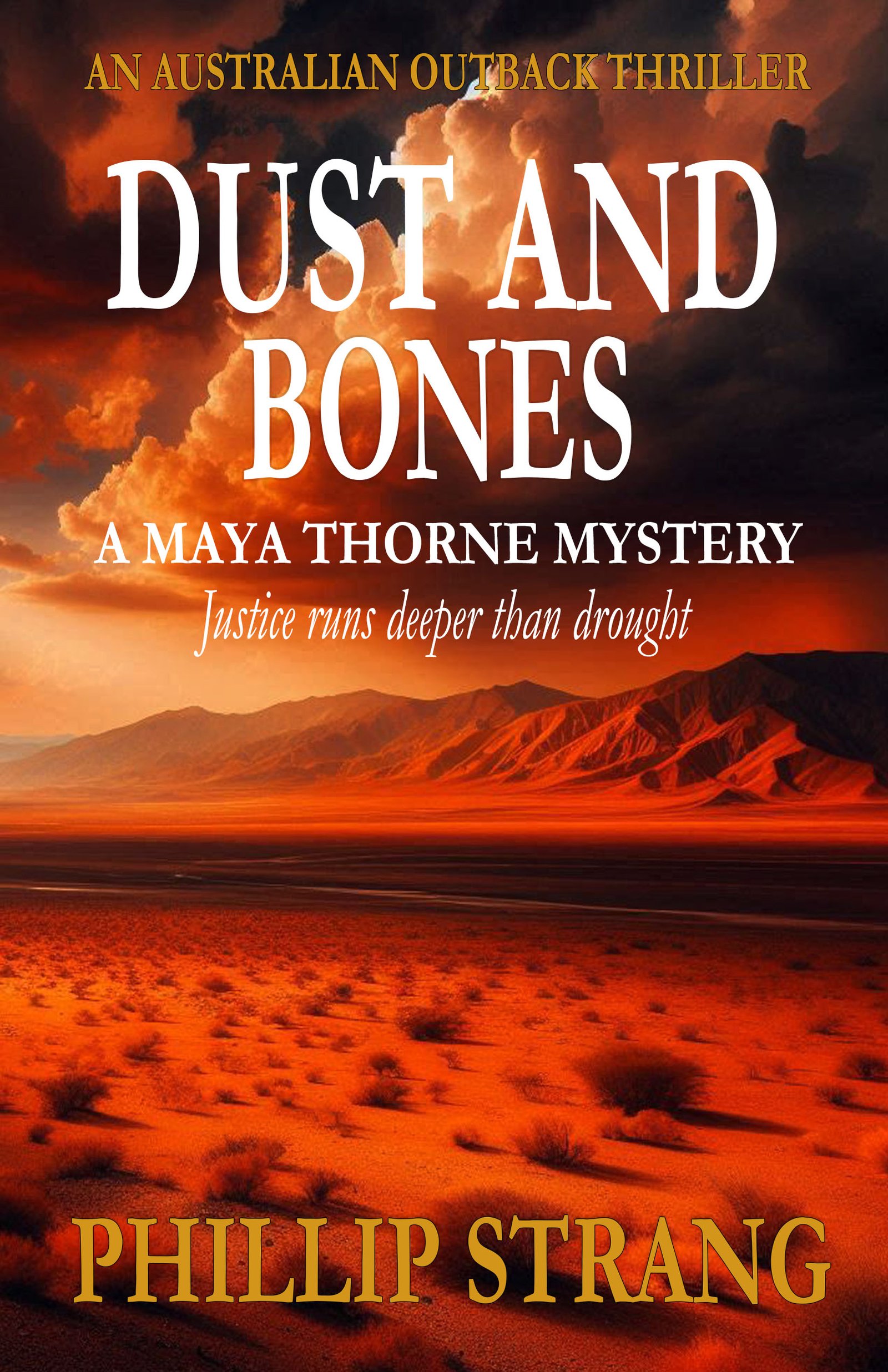
A MAYA THORNE MYSTERY
Get Dust and Bones Free
Justice runs deeper than drought.
Red dust. Shallow graves. A detective who hunts killers where the law runs thin and the nearest help is two hundred miles away.
Send Me the BookYou'll also receive occasional new release emails. Unsubscribe anytime. No spam, ever.
As an Amazon Associate, Phillip Strang earns from qualifying purchases. This page contains affiliate links — buying through them costs you nothing extra.