
Crime fiction book clubs operate differently from individual readers, and authors who ignore this distinction miss opportunities to create deeper engagement. These readers dissect motivations, debate red herrings, and argue over whether the detective’s methods were justified—they’re not just consuming your story, they’re performing surgery on it.
Across eighteen series and more than 150 novels, I’ve learned that writing for book club readers requires deliberate craft choices that reward group analysis without sacrificing individual reading pleasure. The challenge lies in creating stories that function on multiple levels simultaneously.
Building Characters That Generate Discussion
Book club readers gravitate toward morally complex characters because ambiguity fuels conversation. A detective who always follows procedure and never makes mistakes might satisfy individual readers seeking escapism, but gives book clubs nothing to chew on. These groups want to argue about whether your protagonist crossed ethical lines, whether their personal demons justify their actions, or whether their relationships ring true.
In my DCI Isaac Cook series, I deliberately gave Isaac a tendency to pursue cases that others consider closed. This isn’t just a plot device—it creates natural discussion points about obsession versus justice, about when persistence becomes destructive. Book clubs spend entire sessions debating whether Isaac’s methods are admirable or concerning, and that engagement extends their connection to the series.
The key is embedding genuine moral questions into character behavior rather than tacking them on as afterthoughts. When your detective makes a choice that could reasonably be viewed as both necessary and questionable, you’ve created discussion fuel. When every character decision is obviously right or wrong, you’ve written for individual consumption only.
Structuring Mysteries That Reward Group Analysis
Individual readers often race toward the solution, but book club members typically read more slowly and discuss theories as they go. This means your plotting needs to support analysis at multiple stages, not just at the revelation. Effective crime fiction for book clubs plants genuine clues early enough that sharp readers can form defensible theories, but complex enough that those theories require discussion to fully develop.
I structure reveals in layers rather than single moments. In Maya Thorne, the isolated outback setting means information comes slowly, which naturally creates pause points where book clubs can stop and theorize. Each new piece of evidence should both confirm some existing theories and complicate others. This isn’t about being deliberately obtuse—it’s about reflecting how real investigations unfold, with partial information leading to multiple plausible interpretations.
The mistake many authors make is either making the solution too obvious for experienced crime fiction readers or so obscure that it feels arbitrary. Book clubs want to feel clever for spotting connections, but they also want those connections to feel earned. The best police procedurals achieve this balance by making the evidence clear in hindsight while remaining genuinely challenging during the investigation.
Creating Thematic Depth Without Heavy-Handedness
Book clubs often choose crime fiction because the genre naturally explores themes of justice, power, corruption, and human nature. However, readers can smell authorial agenda from miles away, and nothing kills book club discussion faster than feeling lectured. The themes need to emerge organically from the story rather than being imposed upon it.
Consider how setting can carry thematic weight without becoming preachy. Small-town corruption stories work because the intimate setting makes power dynamics personal and visible. Urban police procedurals can explore institutional failure through individual cases. The Australian outback in my Maya Thorne series isn’t just backdrop—the isolation and harsh environment reflect the moral landscape of the crimes being investigated.
Effective thematic development comes through accumulation rather than declaration. Show the same ethical dilemma from multiple angles through different characters. Let consequences play out over time rather than resolving everything neatly. Book clubs want to wrestle with questions, not receive answers.
How I Actually Approach Writing for Group Readers
When I’m plotting a new novel, I deliberately include what I call ‘discussion anchors’—moments where reasonable people might disagree about character motivations or proper courses of action. These aren’t manufactured controversies but genuine gray areas that emerge naturally from the story.
I also plant multiple legitimate interpretations of key evidence early in the manuscript. This doesn’t mean misleading readers with false clues, but rather presenting information that supports several logical theories until additional evidence narrows the possibilities. In Alex Harlan novels, the FBI context allows for institutional politics that can color how evidence is interpreted or prioritized, creating natural uncertainty.
During revision, I specifically look for places where the story might be too neat or where character motivations might be too simple. If I can’t imagine a book club spending at least ten minutes debating a major character decision, I haven’t dug deep enough into the psychological complexity. This attention to moral ambiguity has strengthened my individual readership as well, because complexity makes characters feel more human.
Common Mistakes That Kill Book Club Engagement
The biggest error I see is authors who mistake confusion for complexity. Withholding crucial information isn’t the same as creating genuine mystery—it’s just frustrating. Book clubs want to feel they have enough pieces to theorize meaningfully, even if they don’t have the complete picture. Related to this is the tendency to make solutions depend on information that only appears in the final chapters. This cheats readers who’ve been actively trying to solve the puzzle alongside your detective.
Another common problem is creating characters who are either saints or monsters with no middle ground. Book clubs thrive on moral ambiguity, but that doesn’t mean every character needs dark secrets. It means showing how good people can make questionable choices under pressure, or how flawed people can still perform essential functions. The best action thrillers understand that heroism and human weakness often coexist in the same person.
Equally damaging is the tendency to resolve everything too cleanly. Real crimes leave psychological scars, institutional damage, and unanswered questions. When every loose thread gets tied up and every character gets exactly what they deserve, you’ve written a fairy tale, not crime fiction. Book clubs want to discuss what happens after your story ends, how the characters will live with their experiences, and whether justice was actually served.
Conclusion
Writing crime fiction that engages book clubs requires embracing ambiguity without sacrificing clarity, developing complex characters without losing narrative drive, and trusting readers to wrestle with difficult questions. The payoff is stories that generate deeper discussion and longer-lasting reader connection.
About Phillip Strang
Phillip Strang is an Australian crime and thriller novelist. Across eighteen series and more than 150 novels, his work spans London police procedurals (DCI Isaac Cook), UK investigations (DI Tremayne), Australian outback crime (Maya Thorne), FBI thrillers (Alex Harlan), Scottish Highland mysteries (DI Sarah Lynch), and espionage (Steve Case). Learn more about Phillip or browse his complete catalogue on Amazon.
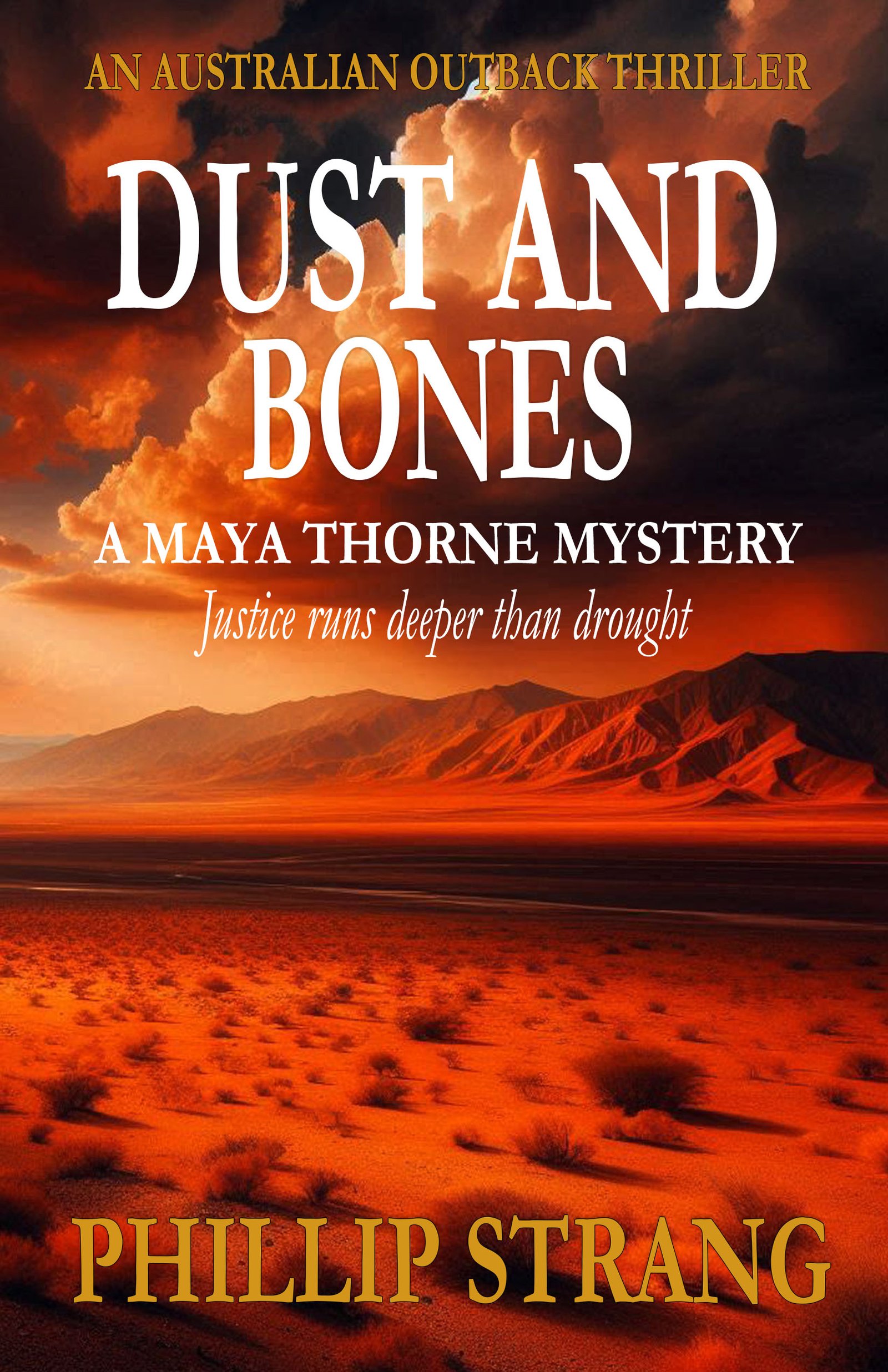
A MAYA THORNE MYSTERY
Get Dust and Bones Free
Justice runs deeper than drought.
Red dust. Shallow graves. A detective who hunts killers where the law runs thin and the nearest help is two hundred miles away.
Send Me the BookYou'll also receive occasional new release emails. Unsubscribe anytime. No spam, ever.
As an Amazon Associate, Phillip Strang earns from qualifying purchases. This page contains affiliate links — buying through them costs you nothing extra.