
Climate as Character in Crime Fiction elevates environmental elements beyond mere backdrop into active story forces that shape plot, tension, and character decisions. The difference between weather as decoration and climate as character lies in how deeply these elements integrate into your story’s DNA.
Across eighteen series and more than 150 novels, I’ve found that climate becomes character when it actively opposes, reveals, or transforms your protagonists in ways that drive the investigation forward.
The Mechanics of Climate as Character in Crime Fiction
Climate functions as character through three primary mechanisms: obstacle, revealer, and amplifier. As obstacle, weather creates immediate physical barriers that force investigators into difficult choices. The Highland mists in my DI Sarah Lynch series don’t just provide atmosphere—they hide evidence, obscure crime scenes, and force Sarah to rely on instinct when visibility drops to metres.
As revealer, climate strips away social pretenses and exposes character truth. Extreme conditions force people to show who they really are under pressure. When the Australian outback heat reaches its peak in the Maya Thorne novels, suspects can’t maintain facades. The environment becomes an interrogation tool more powerful than any interview room technique.
As amplifier, climate magnifies existing tensions between characters and within communities. A brewing storm doesn’t create conflict—it intensifies what’s already simmering beneath the surface.
Integrating Environment Into Plot Structure
Climate works as character when it drives story beats rather than decorating them. The key lies in making environmental conditions essential to your plot progression, not incidental to it. Weather should create problems that can’t be solved by simply waiting it out or moving indoors.
I structure climate integration around three story levels: immediate scene tension, investigation complications, and thematic resonance. At the scene level, environmental conditions must directly impact what characters can or cannot do in that moment. Heavy rain washing away tire tracks isn’t just convenient plot manipulation—it’s only effective if that loss forces your investigator toward a different, more difficult path that reveals new story information.
Investigation complications arise when climate creates cascading problems that compound throughout your story. A snowstorm that cuts off a remote village doesn’t just trap your detective with suspects—it should also disable communication systems, limit forensic capabilities, and force reliance on old-fashioned detective work. These limitations should reveal character skills and push investigations in unexpected directions.
Common Environmental Mistakes That Weaken Crime Fiction
The most frequent error writers make is using climate as convenient plot manipulation rather than consistent story pressure. Weather that appears exactly when needed to help or hinder your protagonist feels contrived because it serves the writer’s convenience rather than the story’s logic.
Another critical mistake involves misunderstanding how people actually respond to familiar environmental conditions. Local characters don’t panic at weather patterns they’ve lived with their entire lives. A Yorkshire farmer won’t be shocked by hill fog, and a Miami detective won’t be paralyzed by hurricane preparations. Climate affects locals differently than outsiders, and this distinction creates more nuanced story possibilities than treating all characters as equally vulnerable to environmental conditions.
Writers also err by making climate universally hostile rather than selectively challenging. Effective environmental character work recognizes that the same conditions help some characters while hindering others. Rain might wash away evidence, but it also drives people indoors where they’re easier to locate. Desert heat might exhaust pursuing officers, but it also dehydrates fleeing suspects.
The weakest environmental writing treats climate as purely physical challenge rather than psychological pressure. Extreme conditions affect judgment, memory, and decision-making in ways that should influence how characters process information and interact with each other.
My Approach to Environmental Character Development
When developing climate as character, I begin with research into how specific environmental conditions actually affect human behavior, not just how they might look dramatically on the page. Understanding the physiology of hypothermia, the psychology of isolation, or the social dynamics of communities under environmental stress provides authentic foundation for fictional scenarios.
I map climate conditions against character backgrounds to identify who would be most and least affected by specific environmental pressures. This creates natural conflict and alliance opportunities. In my DCI Isaac Cook series, London’s urban climate affects characters differently based on their origins, economic status, and professional experience.
The most important technique I’ve developed involves making environmental conditions persistent rather than episodic. Instead of using weather as occasional plot device, I build entire story arcs around sustained environmental pressure that escalates throughout the investigation. This approach transforms climate from background element into central story tension that influences every scene and character interaction.
I also focus on the indirect effects of climate rather than just direct physical challenges. How does prolonged heat affect community tensions? How do shortened daylight hours impact witness reliability? How does seasonal isolation change social dynamics in small communities? These secondary effects often provide richer story material than obvious environmental obstacles, and they integrate more naturally with the psychological complexity that distinguishes strong police procedurals and character-driven crime fiction.
Conclusion
Climate becomes character when it actively shapes story outcomes rather than simply providing atmospheric decoration. The environment must challenge characters in ways that force growth, reveal truth, and drive investigations toward resolution through difficulty rather than convenience.
About Phillip Strang
Phillip Strang is an Australian crime and thriller novelist. Across eighteen series and more than 150 novels, his work spans London police procedurals (DCI Isaac Cook), UK investigations (DI Tremayne), Australian outback crime (Maya Thorne), FBI thrillers (Alex Harlan), Scottish Highland mysteries (DI Sarah Lynch), and espionage (Steve Case). Learn more about Phillip or browse his complete catalogue on Amazon.
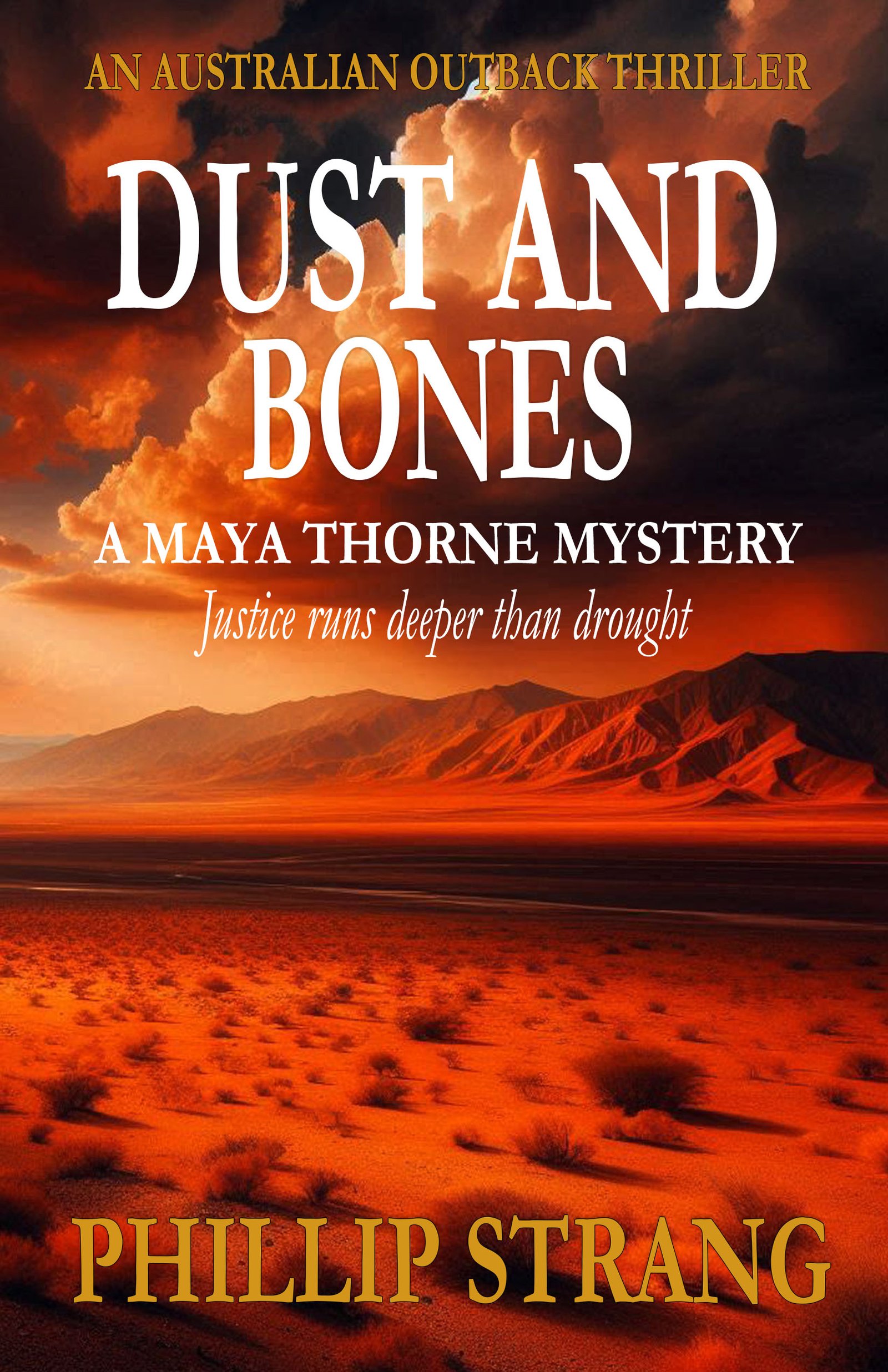
A MAYA THORNE MYSTERY
Get Dust and Bones Free
Justice runs deeper than drought.
Red dust. Shallow graves. A detective who hunts killers where the law runs thin and the nearest help is two hundred miles away.
Send Me the BookYou'll also receive occasional new release emails. Unsubscribe anytime. No spam, ever.
As an Amazon Associate, Phillip Strang earns from qualifying purchases. This page contains affiliate links — buying through them costs you nothing extra.