
Wine Country Settings in Crime Fiction present a fascinating paradox for writers: the bucolic beauty of rolling vineyards and tasting rooms creates the perfect contrast for dark deeds. The genteel world of wine appreciation masks deep currents of family rivalry, corporate greed, and social pretension that fuel compelling mysteries.
Across eighteen series and more than 150 novels, I’ve learned that setting isn’t decoration—it’s a character that shapes every aspect of your story. Wine regions offer crime writers a particularly rich palette of possibilities, from intimate family wineries to sprawling commercial operations, each with their own social dynamics and potential for murder.
The Natural Tensions of Wine Country
Wine regions operate on multiple levels of conflict that crime writers can exploit. Family wineries carry generations of resentment, succession battles, and sibling rivalry. Commercial operations bring corporate politics, industrial espionage, and environmental disputes. The seasonal nature of winemaking creates natural pressure points—harvest time, when tensions run highest and workers flood in from outside.
These settings also attract a particular type of victim and suspect. Wine country draws wealthy retirees, ambitious entrepreneurs, and artistic types seeking the good life. Each group brings their own secrets and motivations. The retired executive might have enemies from his corporate past. The ambitious newcomer might be cutting corners or stealing techniques. The artist might be running from something darker than city life.
I’ve found that wine country also provides excellent cover for other criminal enterprises. Remote vineyard properties offer privacy for illegal activities, while the legitimate wine trade provides cover for smuggling operations—themes that work particularly well in action thriller novels where the scope can expand beyond simple murder.
Physical Landscape as Crime Scene
Vineyards offer crime writers diverse physical environments within a single setting. The fields themselves provide isolation and seasonal changes that affect how crimes unfold and evidence deteriorates. Harvest time brings temporary workers who might witness something or disappear before police arrive. Winter pruning season leaves the landscape stark and exposed, perfect for discoveries.
The industrial side of winemaking—fermentation tanks, crushing equipment, storage caves—provides opportunities for both murder methods and body disposal that feel organic to the setting. A victim found in a fermentation tank during harvest isn’t just dramatic; it’s a crime that could only happen in this specific environment.
Wine caves deserve particular attention. These underground storage facilities create perfect venues for clandestine meetings, hidden evidence, or dramatic confrontations. The temperature-controlled environment affects decomposition rates, while the maze-like quality of extensive cave systems can trap both victims and perpetrators.
Social Architecture in Wine Country Settings in Crime Fiction
The social structure of wine regions creates natural suspects and motives. Established families guard their reputations and market positions jealously. Newcomers threaten traditional ways or bring outside conflicts. The divide between owners and workers, locals and tourists, old money and new money provides multiple fault lines for crime.
Wine competitions, industry events, and harvest celebrations bring these different groups together in pressure-cooker environments. A murder at a wine auction immediately gives you a closed circle of suspects with known relationships and clear motives. The victim’s public humiliation of a competitor, the revelation of fraud in a prized vintage, or the announcement of a hostile takeover all provide classic triggers in a contemporary setting.
The seasonal nature of wine tourism also affects investigation dynamics. Summer crowds provide cover and confusion, while off-season isolation limits witnesses and escape routes. A body discovered during the busy season faces different investigative challenges than one found when the tasting rooms are shuttered.
My Approach to Wine Country Atmosphere
When I’m crafting wine country scenes, I focus on sensory details that serve the plot. The smell of fermentation can mask the odor of decomposition. The sound of machinery can cover screams. The beauty of sunset over vineyards becomes sinister when you’re hiding a body.
I research the specific wine region I’m using because each has distinct characteristics. Napa Valley operates differently from the Barossa Valley or Bordeaux. Climate, terrain, grape varieties, and local regulations all affect how crimes unfold and investigations proceed. In my Maya Thorne series, I’ve used Australian wine regions where the isolation and harsh climate create additional survival pressures that urban settings can’t match.
The key is making the wine country setting essential to your plot, not just attractive window dressing. If your murder mystery could happen anywhere with minor adjustments, you haven’t fully utilized your setting. The crime should grow from the unique tensions and opportunities that vineyards provide.
Common Mistakes to Avoid
Many writers treat wine country as a generic upscale setting, missing the specific dynamics that make it compelling. Simply relocating an urban murder to a vineyard doesn’t create a wine country mystery. The setting must shape character motivations, provide unique murder methods, and create investigation challenges specific to that environment.
Overemphasizing the glamorous aspects is another trap. Yes, wine country attracts wealthy people and creates beautiful scenes, but the real drama comes from the agricultural reality, the seasonal pressures, and the generational conflicts. A murder during harvest when everyone’s working eighteen-hour days is more interesting than one at a leisurely tasting.
Writers also commonly underestimate the technical knowledge required. Readers interested in wine country settings often know about winemaking processes, grape varieties, and industry practices. Getting basic facts wrong destroys credibility faster than in more generic settings. This applies equally to police procedural novels where investigative procedures must account for agricultural crime scene challenges.
Finally, avoid making every character either a refined wine expert or a rough agricultural worker. Real wine regions include everyone from PhD enologists to seasonal laborers, retired doctors to ambitious sommeliers. This diversity provides richer suspect pools and more complex social dynamics than stereotypical casting.
Conclusion
Wine country settings offer crime writers a perfect blend of beauty and brutality, tradition and innovation, intimacy and isolation. When properly developed, these settings become integral to plot development rather than mere atmospheric decoration, creating mysteries that could only unfold among the vines.
About Phillip Strang
Phillip Strang is an Australian crime and thriller novelist. Across eighteen series and more than 150 novels, his work spans London police procedurals (DCI Isaac Cook), UK investigations (DI Tremayne), Australian outback crime (Maya Thorne), FBI thrillers (Alex Harlan), Scottish Highland mysteries (DI Sarah Lynch), and espionage (Steve Case). Learn more about Phillip or browse his complete catalogue on Amazon.
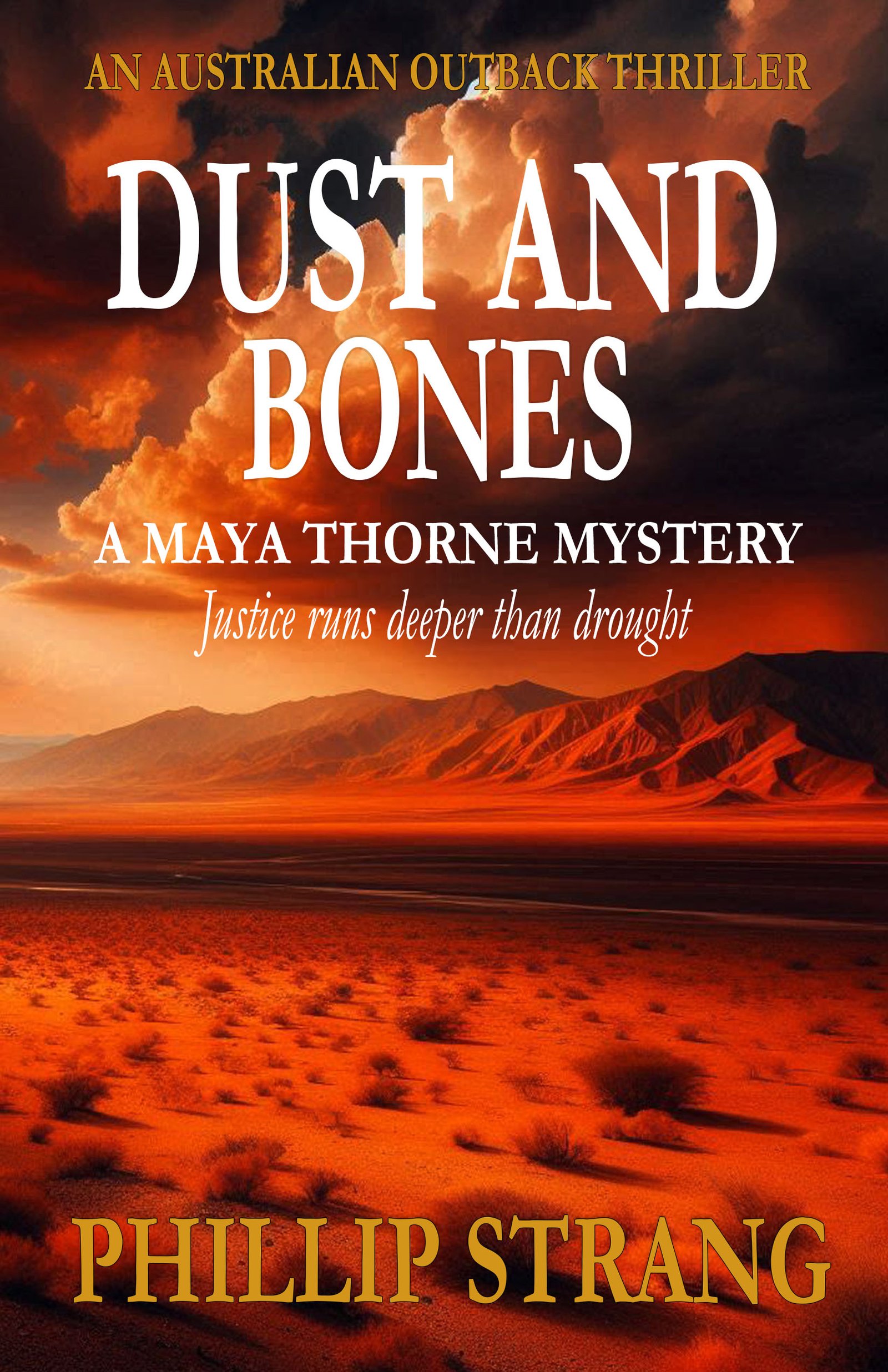
A MAYA THORNE MYSTERY
Get Dust and Bones Free
Justice runs deeper than drought.
Red dust. Shallow graves. A detective who hunts killers where the law runs thin and the nearest help is two hundred miles away.
Send Me the BookYou'll also receive occasional new release emails. Unsubscribe anytime. No spam, ever.
As an Amazon Associate, Phillip Strang earns from qualifying purchases. This page contains affiliate links — buying through them costs you nothing extra.