
Agricultural Settings in Crime Fiction present writers with a deceptively complex landscape that most authors either romanticise beyond recognition or treat as merely quaint backdrop. The reality is that farms, ranches, and rural communities operate under their own brutal logic—economic pressures, seasonal imperatives, and social hierarchies that create natural friction for compelling crime narratives.
Across eighteen series and more than 150 novels, I have found that agricultural settings force both characters and plot into concentrated pressure points that urban environments simply cannot replicate. The isolation inherent in rural life becomes a character unto itself, shaping motivation, limiting escape routes, and creating the kind of claustrophobic tension that drives readers through pages.
The Economics of Rural Crime
Agricultural communities live and die by economic realities that city dwellers rarely comprehend. Drought, market fluctuations, corporate buyouts, and inheritance disputes create motives that feel both primal and utterly contemporary. When I developed the Maya Thorne series set in the Australian outback, I discovered that land ownership disputes carry emotional weight that transcends simple greed—they represent generational survival, family honour, and cultural identity.
The mistake many writers make is treating rural crime as a simple transplant of urban motivation into bucolic settings. But agricultural crime springs from different wells: water rights that determine who prospers and who fails, inheritance laws that pit sibling against sibling, and the constant threat of losing land that families have worked for generations. These aren’t abstract concerns—they’re existential threats that create desperate people capable of extreme actions.
Corporate agriculture adds another layer of complexity. When multinational agribusiness moves into traditional farming communities, the resulting conflicts provide rich material for conspiracy thrillers. The David-versus-Goliath dynamic feels authentic because it plays out in courtrooms and bank foreclosure proceedings across rural areas daily.
Isolation as Narrative Engine
Rural isolation operates differently from urban anonymity. In cities, characters disappear into crowds; in agricultural settings, disappearance means something has gone terribly wrong. Every absence is noticed, every stranger remarked upon, yet paradoxically, vast distances between properties mean that screams go unheard and bodies can remain hidden for months.
This isolation creates natural story constraints that sharpen focus. Limited suspect pools force writers to dig deeper into character motivation rather than relying on random crime. When everyone knows everyone else’s business, secrets become more volatile and their revelation more devastating. The social fabric of rural communities means that every crime ripples through multiple generations and extended family networks.
Weather becomes a crucial plot element in ways that urban settings cannot match. Blizzards that cut off communication, floods that wash away evidence, and droughts that reveal long-buried secrets all serve the narrative while maintaining complete authenticity. Unlike the forced coincidences that plague some action thriller novels, agricultural settings provide organic obstacles and revelations.
Social Hierarchies and Hidden Tensions in Agricultural Settings in Crime Fiction
Rural communities maintain social structures that urban dwellers often assume disappeared decades ago. Landowners versus workers, old families versus newcomers, traditional farmers versus organic converts—these divisions run deep and create simmering tensions that explode into violence when properly pressurised.
The seasonal nature of agricultural work brings transient populations that complicate investigations. Migrant workers, seasonal hands, and temporary labourers move through communities leaving minimal traces, creating perfect suspects who may have vanished by the time crimes are discovered. Yet these same populations often possess crucial information about the permanent residents’ secrets, having observed family dynamics and business dealings from positions of invisibility.
Religious and cultural conservatism in many agricultural areas creates additional fault lines. Progressive newcomers clash with traditional values, creating conflicts that feel both timeless and utterly contemporary. These aren’t stereotypes if handled with genuine understanding—they’re reflections of real tensions that exist when different worldviews occupy the same geographical space.
Local law enforcement in agricultural settings often faces unique challenges that city police never encounter. Sheriff’s departments covering hundreds of square miles with minimal personnel, jurisdictional disputes between county and state authorities, and the delicate politics of investigating crimes involving prominent local families all provide realistic obstacles that enhance rather than hinder narrative tension.
My Approach to Rural Crime Writing
When I write agricultural settings, I begin with the land itself—not as scenery, but as economic reality. Who owns what, how they acquired it, and what they’ll do to keep it drives character motivation more powerfully than psychological profiles. I research actual agricultural practices relevant to my story’s location and time period, because authenticity in these details separates professional crime fiction from tourist fantasies.
I pay particular attention to the rhythm of rural life, which operates on seasonal and daily cycles that urban environments lack. Morning chores, seasonal planting and harvesting, market days, and community events provide natural gathering points for characters while maintaining realistic pacing. Unlike police procedural novels that can accelerate through bureaucratic shortcuts, rural investigations often require patience and relationship-building that mirrors the agricultural lifestyle.
The key is understanding that rural characters aren’t urban characters transplanted to prettier settings. Their values, priorities, and decision-making processes reflect their environment. They think in terms of seasons and generations, not quarterly reports and weekend plans. This fundamental difference in worldview creates authentic conflict when outside forces—whether criminal investigators or criminal enterprises—intrude into their world.
Common Pitfalls in Rural Crime Writing
The most persistent error I observe in agricultural crime fiction is the outsider-saviour narrative, where sophisticated urban investigators solve crimes that baffle simple rural folk. This approach not only insults rural intelligence but misses the fundamental truth that local knowledge provides advantages that training cannot replicate. Understanding local family histories, recognising unusual behaviour patterns, and knowing which stories don’t add up requires years of community immersion.
Equally damaging is the tendency to present rural communities as either pristine havens corrupted by outside evil or backward societies trapped in primitive thinking. Both approaches rely on stereotypes rather than genuine character development. Real agricultural communities contain the same spectrum of human complexity found anywhere else, shaped by economic pressures and geographic isolation rather than defined by moral simplicity or sophistication.
Technical errors also plague many attempts at rural crime fiction. Writers who research police procedure meticulously often ignore agricultural realities, creating scenes where characters perform impossible farming tasks or navigate rural geography that makes no practical sense. When a forensic pathologist can determine cause of death from a body that’s been in a pig pen for three days, readers familiar with livestock behaviour immediately spot the fiction.
Finally, many writers underestimate the complexity of rural economics and legal structures. They treat land ownership, water rights, and agricultural contracts as simple background elements rather than recognising them as potential sources of sophisticated white-collar crime that rivals anything found in corporate boardrooms.
Conclusion
Agricultural settings demand respect for their complexity and authenticity in their representation, but they reward crime writers with natural story elements that urban environments cannot provide. The isolation, economic pressures, and social dynamics inherent in rural life create organic sources of conflict and tension that feel both timeless and immediate when properly developed.
About Phillip Strang
Phillip Strang is an Australian crime and thriller novelist. Across eighteen series and more than 150 novels, his work spans London police procedurals (DCI Isaac Cook), UK investigations (DI Tremayne), Australian outback crime (Maya Thorne), FBI thrillers (Alex Harlan), Scottish Highland mysteries (DI Sarah Lynch), and espionage (Steve Case). Learn more about Phillip or browse his complete catalogue on Amazon.
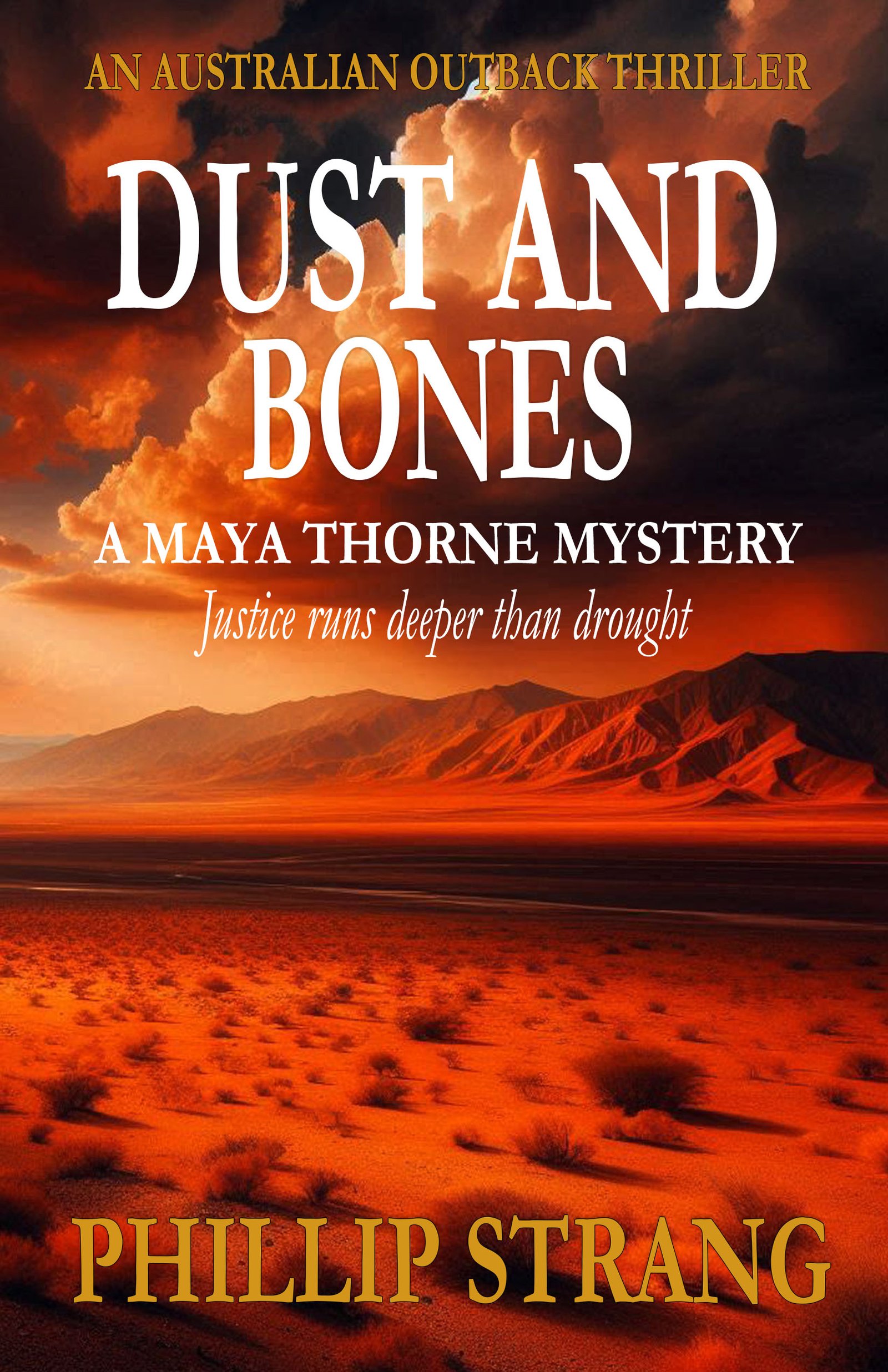
A MAYA THORNE MYSTERY
Get Dust and Bones Free
Justice runs deeper than drought.
Red dust. Shallow graves. A detective who hunts killers where the law runs thin and the nearest help is two hundred miles away.
Send Me the BookYou'll also receive occasional new release emails. Unsubscribe anytime. No spam, ever.
As an Amazon Associate, Phillip Strang earns from qualifying purchases. This page contains affiliate links — buying through them costs you nothing extra.