
Atmosphere in crime fiction isn’t decoration—it’s the invisible hand that guides your reader’s emotional response before they even realize what’s happening. The difference between a forgettable procedural and a book that haunts readers lies not in the complexity of your plot, but in how effectively you use prose to build the mood that makes every scene resonate. Most writers treat atmosphere as an afterthought, sprinkling descriptive passages between dialogue and action, when it should be the foundation upon which everything else is built.
Across eighteen series and more than 150 novels, I’ve found that atmosphere isn’t something you add to a scene—it’s something you construct the scene around. The prose choices you make in the opening paragraph of a chapter will determine whether your reader feels the creeping dread of a psychological thriller or the gritty urgency of a police procedural.
Sentence Rhythm as Emotional Architecture
The rhythm of your sentences creates the heartbeat of your scene. Short, clipped sentences build tension and urgency. They make readers feel breathless, off-balance, ready for something to snap. Longer, more complex sentences slow the pace, allowing dread to accumulate like storm clouds gathering on the horizon.
When I’m writing a confrontation scene in my DCI Isaac Cook series, I’ll deliberately fragment the prose as tension escalates. ‘Cook stepped forward. The suspect’s hand twitched. Time compressed.’ But in the quieter investigative moments, I let the sentences breathe, mirroring the methodical pace of detective work. This isn’t arbitrary—it’s using the physical act of reading to mirror the emotional state you want to create.
The key is consistency within each scene while allowing variation between them. A chapter that maintains the same sentence rhythm throughout feels flat, regardless of how well-written individual sentences might be. You’re conducting an orchestra, not playing a single note.
Weather and Setting as Character Psychology
Amateur writers use weather as mood decoration—it’s raining because the scene is sad, or it’s sunny because things are going well. Professional writers understand that atmospheric elements should reflect and amplify the internal state of their characters, not simply mirror the plot’s emotional temperature.
In the Australian outback settings of my Maya Thorne series, the relentless heat isn’t just background—it becomes a pressure that drives character decisions and escalates conflicts. The landscape doesn’t just set the scene; it becomes an antagonist that strips away the social veneer and exposes what people really are underneath. This is how you make setting work harder in your narrative.
The most effective atmospheric writing treats environmental elements as extensions of character psychology rather than independent decorative elements. When your protagonist is struggling with guilt, don’t just make it rain—make the rain persistent, invasive, finding its way through supposedly waterproof barriers. Make it reflect the way guilt seeps through psychological defenses.
How I Actually Build Atmospheric Layers
When I sit down to write a scene, atmosphere comes first, before I even know exactly what’s going to happen in terms of plot. I start with the emotional effect I want to achieve, then work backwards to the prose techniques that will create it. This might seem backwards, but it’s the difference between writing that serves the story and writing that creates the story.
I keep what I call an ‘atmosphere notebook’ for each series—collections of phrases, sensory details, and rhythm patterns that capture the specific mood signature of that world. For the London settings in police procedurals, I have pages of notes about how different neighborhoods smell, sound, and feel at different times of day and different emotional temperatures.
The practical process involves layering. First, I establish the sensory baseline—what the character notices without thinking about it. Then I add the details that emerge under stress or focus. Finally, I weave in the elements that exist in the space between conscious observation and subconscious unease. Most writers stop at the first layer, which is why their atmospherics feel thin.
Each layer uses different prose techniques. The baseline layer uses simple, almost invisible description. The stress layer uses more specific, sometimes harsh details. The subliminal layer uses rhythm, sound patterns in the language itself, and images that work on readers without their conscious awareness.
The Fatal Mistakes That Kill Atmosphere
The most common atmospheric failure is what I call ‘weather report syndrome’—writers who think that describing the setting equals creating atmosphere. ‘It was a dark and stormy night’ isn’t atmospheric; it’s meteorological data. Atmosphere lives in how the storm affects your characters, how it changes their behavior, how it seeps into their decision-making process.
Another killer is inconsistent sensory focus. Writers will spend paragraphs on visual details, then suddenly switch to sound or smell without establishing why the character’s attention has shifted. Effective atmospheric writing follows the natural flow of human perception, where focus shifts for psychological reasons, not because the writer remembered they should include different senses.
The subtlest mistake is emotional telegraphing—using atmospheric elements to announce what the reader should feel rather than creating the conditions that make them feel it naturally. Writing ‘the ominous clouds gathered’ tells the reader that something ominous is coming. Better to describe clouds that make the reader feel unease without labeling that feeling. Let them think they’re discovering the mood rather than being instructed in it.
Over-writing is equally dangerous. Some writers layer on so much atmospheric detail that it becomes a barrier between the reader and the story. Atmosphere should be invisible in its operation—present and powerful, but never so obvious that it calls attention to itself as technique. When readers notice your beautiful atmospheric writing, you’ve probably used too much of it.
Many writers also make the mistake of treating atmosphere as constant background rather than something that should ebb and flow with the story’s needs. Even the most atmospheric scenes need moments of clarity, breathing space where the mood lifts enough for readers to process what they’ve experienced. Relentless atmosphere becomes atmospheric noise.
Advanced Atmospheric Techniques
The most sophisticated atmospheric writing works through implication and absence rather than presence. What’s not described can be more powerful than what is. In action thriller scenes, the details your character doesn’t have time to notice create urgency more effectively than lengthy descriptions of chaos.
Repetition and variation create atmospheric depth. A phrase or image that appears in slightly different forms throughout a scene builds subliminal pressure. The key is variation—exact repetition feels mechanical, but repetition with subtle changes feels like mounting psychological pressure.
The most advanced technique is atmospheric counterpoint—deliberately setting mood against content to create tension. A conversation about violence in a beautiful garden, or a moment of human connection in a decaying urban landscape. This kind of contrast makes both elements more powerful than they would be independently.
Sound patterns in the prose itself—alliteration, assonance, the rhythm of stressed and unstressed syllables—work below the level of conscious reading to create emotional effects. This isn’t about being poetic; it’s about using the physical experience of language to support your atmospheric goals.
Conclusion
Atmosphere in crime fiction isn’t about pretty writing or impressive descriptions—it’s about creating the emotional conditions that make your story inevitable rather than arbitrary. Master this, and readers won’t just follow your plot; they’ll be driven through it by forces they feel but can’t quite name.
About Phillip Strang
Phillip Strang is an Australian crime and thriller novelist. Across eighteen series and more than 150 novels, his work spans London police procedurals (DCI Isaac Cook), UK investigations (DI Tremayne), Australian outback crime (Maya Thorne), FBI thrillers (Alex Harlan), Scottish Highland mysteries (DI Sarah Lynch), and espionage (Steve Case). Learn more about Phillip or browse his complete catalogue on Amazon.
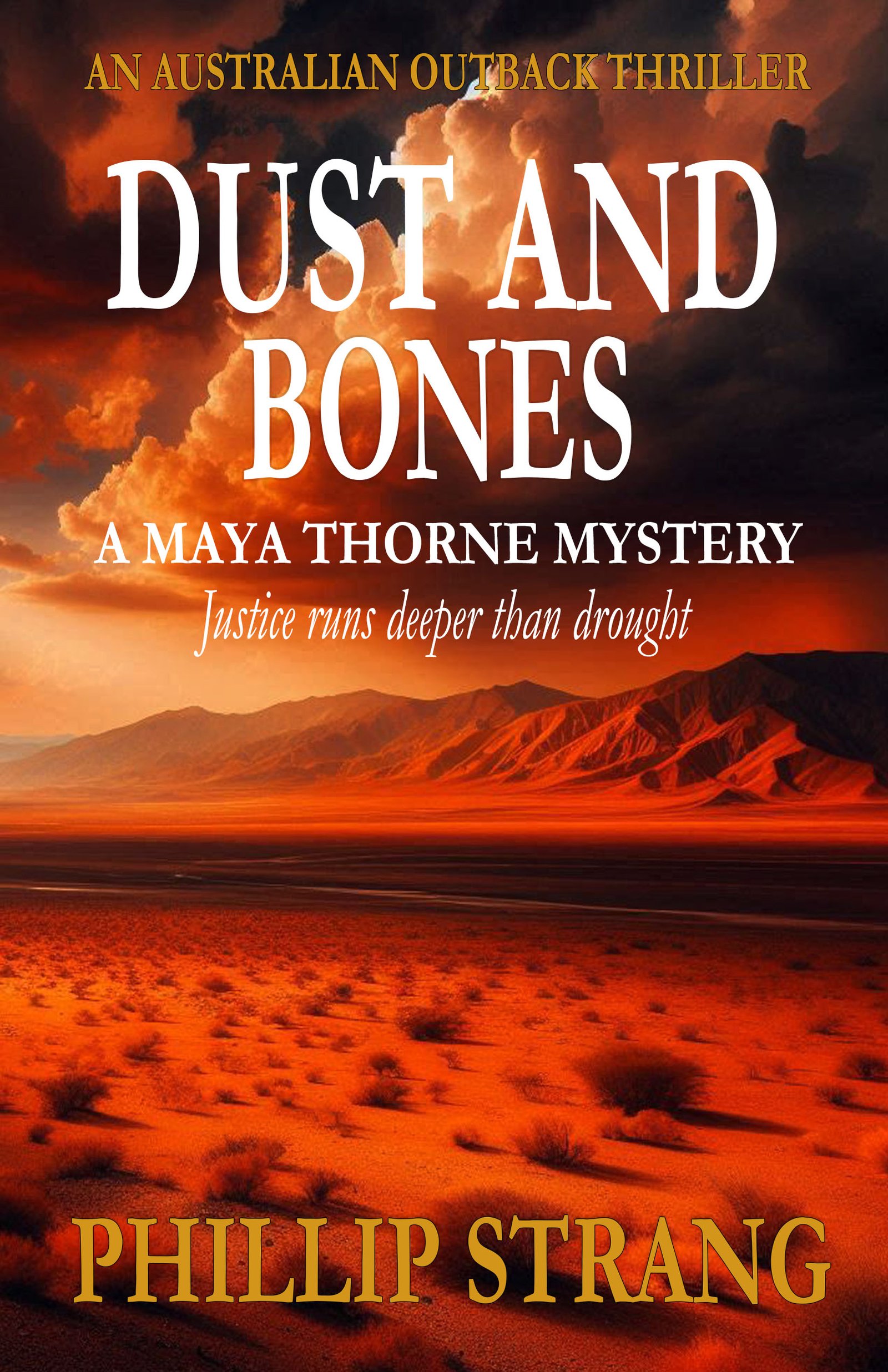
A MAYA THORNE MYSTERY
Get Dust and Bones Free
Justice runs deeper than drought.
Red dust. Shallow graves. A detective who hunts killers where the law runs thin and the nearest help is two hundred miles away.
Send Me the BookYou'll also receive occasional new release emails. Unsubscribe anytime. No spam, ever.
As an Amazon Associate, Phillip Strang earns from qualifying purchases. This page contains affiliate links — buying through them costs you nothing extra.