
Crime fiction demands a particular understanding of human darkness and institutional complexity that many writers only develop through years of professional experience. The accountant who has witnessed corporate fraud, the social worker who has seen domestic violence patterns, or the retired police officer with decades of case knowledge often possess the authentic insight that separates compelling crime fiction from formulaic attempts.
Across eighteen series and more than 150 novels I have found that the most successful career-changers bring specific professional expertise that informs their fictional worlds in ways that purely literary backgrounds cannot replicate.
Leveraging Professional Experience Without Becoming Trapped by It
Your previous career provides credibility and authenticity, but it can also become a creative prison if you rely on it too heavily. The forensic scientist turned novelist has deep technical knowledge, but readers want compelling characters and tight plotting, not laboratory procedure manuals disguised as fiction. I have drawn extensively on various professional encounters throughout my DCI Isaac Cook series, but the procedural elements serve the story rather than dominating it.
The key is distillation. Take the emotional truth and systemic understanding from your professional background while discarding the bureaucratic tedium that makes real life slow but fiction deadly. Your years in insurance claims might have shown you how people rationalize fraud, but your novel needs those insights compressed into scenes that reveal character under pressure, not lengthy explanations of policy interpretation.
Consider what your profession taught you about human behavior under stress, institutional failures, or the gap between public perception and private reality. These universal themes translate across all crime subgenres, whether you are writing police procedurals or psychological thrillers.
Developing Genre Instincts When You Are Starting Late
Career changers often struggle with pacing because they approach writing with the methodical thinking their previous profession required. Legal training produces excellent attention to detail but can result in over-explanation. Medical backgrounds provide diagnostic thinking but sometimes at the expense of emotional immediacy. Business experience offers strategic planning skills but may prioritize logic over the intuitive leaps that drive compelling fiction.
Genre fiction operates on compressed time and heightened stakes. Every scene must advance plot, develop character, or build atmosphere, preferably all three simultaneously. I learned this lesson while developing my Maya Thorne series, where the isolated Australian outback setting demands that each chapter earns its place through multiple functions rather than singular purpose.
Read within your chosen subgenre extensively, but read as a writer analyzing technique rather than as a casual consumer. Notice how established authors handle exposition, transition between viewpoints, and maintain tension across chapters. The structural patterns become apparent once you train yourself to see them.
My Approach to Managing the Transition
I treat writing as a professional commitment rather than a creative hobby, applying the same discipline I would bring to any serious career endeavor. This means establishing non-negotiable writing time, setting measurable productivity goals, and approaching revision with the same systematic rigor I would apply to any complex project.
The advantage of starting later is that you understand how skills develop through consistent practice rather than sporadic inspiration. Most successful career-changers I know establish writing routines that mirror their previous professional schedules. Early morning writing before family obligations, lunch-hour sessions, or dedicated weekend blocks work better than waiting for perfect creative conditions.
I focus on completing projects rather than perfecting individual sentences during first drafts. Your professional experience has likely taught you that finished work can be improved, but unfinished work serves no purpose. This pragmatic approach accelerates learning because you experience the full cycle from conception through completion multiple times rather than endlessly polishing opening chapters.
Treat rejection and criticism as professional feedback rather than personal judgment. Your previous career probably involved performance evaluation, client feedback, or peer review. Publishing operates similarly, though the emotional stakes feel higher because creative work feels more personal than quarterly reports.
Common Mistakes That Derail Second-Career Crime Writers
Many career-changers assume their professional expertise automatically translates into fictional authority, producing novels that read like training manuals rather than entertainment. The former detective who explains every procedural step in exhaustive detail loses readers who want story momentum, not police academy instruction. Technical accuracy matters, but subordinate it to narrative drive.
Another frequent error involves importing workplace politics and grudges directly into fiction without sufficient transformation. Your incompetent former supervisor may indeed provide inspiration for an antagonist, but readers need characters with clear motivations rather than thinly disguised personal grievances. The emotional truth behind workplace conflicts can inform fictional situations, but the specific details require creative translation.
Overwriting represents perhaps the most common technical mistake among intelligent professionals entering fiction. Academic training, legal background, or medical education often emphasizes thoroughness and precision over economy and impact. Crime fiction rewards lean prose that builds cumulative effect through strategic word choice rather than comprehensive coverage. When developing the action sequences across my various series, I learned that suggesting violence often creates more powerful reader response than detailed description.
Many second-career writers also underestimate the business aspects of publishing, assuming that quality alone determines success. Your professional background probably involved marketing, client relationships, or strategic planning. Publishing requires similar attention to audience, positioning, and long-term career development alongside the creative work itself.
Building Sustainable Writing Habits Around Life Obligations
Second-career writers typically juggle more complex life situations than younger authors. Mortgage payments, family responsibilities, and established social obligations cannot be abandoned for uncertain publishing income. This constraint actually provides advantages by forcing efficiency and realistic goal-setting.
Establish writing productivity measures that account for your available time rather than comparing yourself to full-time authors. Consistent daily word counts, even modest ones, accumulate into completed manuscripts faster than sporadic weekend writing marathons followed by weeks of inactivity.
Consider your energy patterns throughout typical days and weeks. Many professionals discover their mental clarity peaks during morning hours before workplace demands drain their cognitive resources. Others find evening writing sessions provide creative outlet after structured daytime responsibilities. Weekend writing works for some, but family obligations often make weekday early mornings more reliable.
Set realistic deadlines based on your actual writing pace rather than aspirational goals. Most career-changers can complete a crime novel in twelve to eighteen months with consistent effort, but trying to finish in six months often leads to burnout or abandoned projects.
Conclusion
Writing crime fiction as a second career offers unique advantages through professional experience and life perspective that younger writers cannot replicate. Success depends on translating that experience into compelling fiction while developing genre-specific craft skills through dedicated practice and realistic goal-setting.
About Phillip Strang
Phillip Strang is an Australian crime and thriller novelist. Across eighteen series and more than 150 novels, his work spans London police procedurals (DCI Isaac Cook), UK investigations (DI Tremayne), Australian outback crime (Maya Thorne), FBI thrillers (Alex Harlan), Scottish Highland mysteries (DI Sarah Lynch), and espionage (Steve Case). Learn more about Phillip or browse his complete catalogue on Amazon.
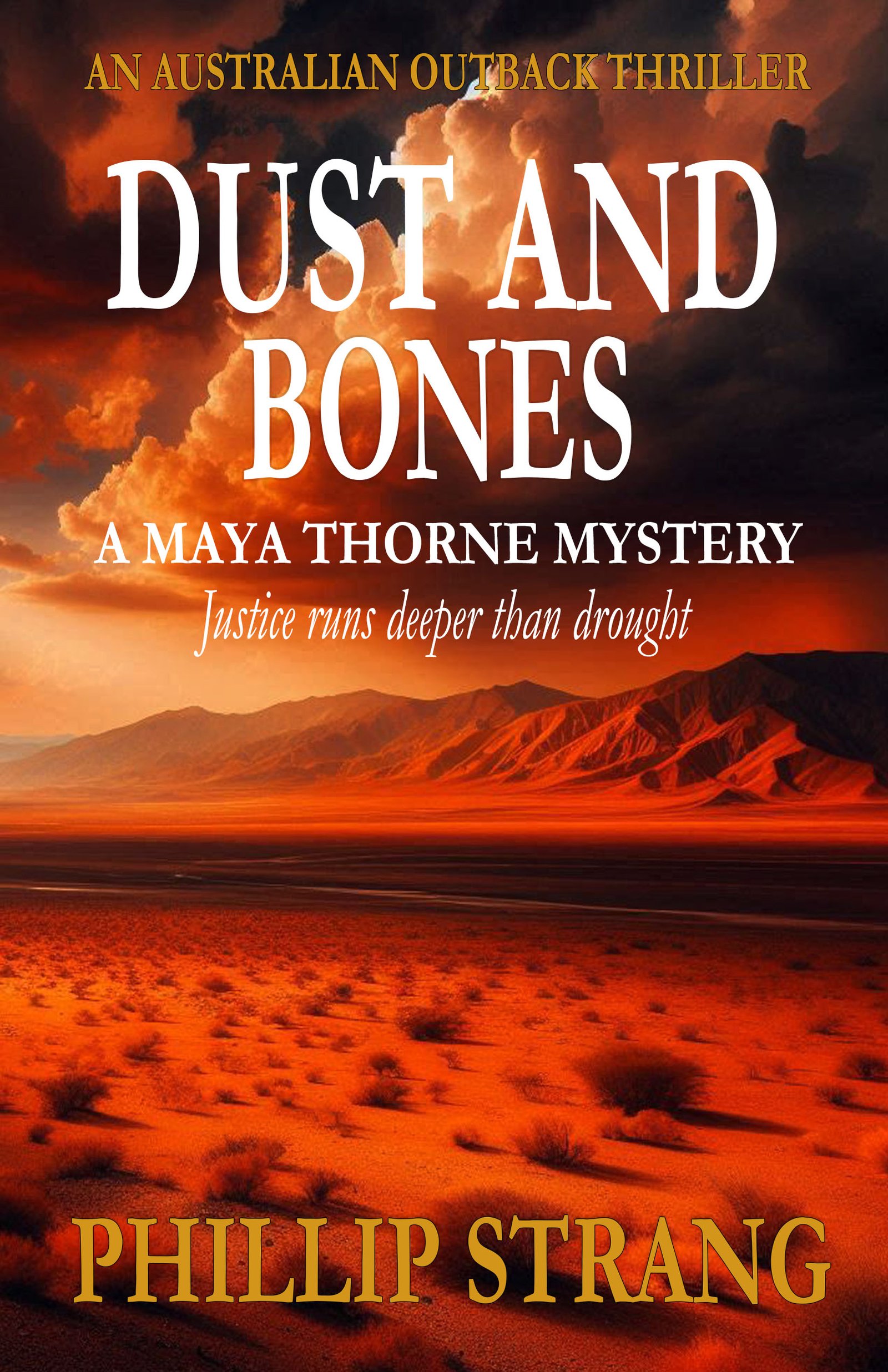
A MAYA THORNE MYSTERY
Get Dust and Bones Free
Justice runs deeper than drought.
Red dust. Shallow graves. A detective who hunts killers where the law runs thin and the nearest help is two hundred miles away.
Send Me the BookYou'll also receive occasional new release emails. Unsubscribe anytime. No spam, ever.
As an Amazon Associate, Phillip Strang earns from qualifying purchases. This page contains affiliate links — buying through them costs you nothing extra.