
Domestic thriller conventions operate within strict boundaries that separate amateur attempts from professional work. The sub-genre demands intimate betrayal, claustrophobic settings, and the systematic destruction of trust between characters who should be safe with each other.
Across eighteen series and more than 150 novels, I have found that domestic thrillers succeed or fail based on how well they exploit the gap between public facades and private realities. The conventions are not suggestions—they are structural requirements that readers expect and publishers demand.
The Closed Circle of Suspicion
Every domestic thriller operates within a closed circle where the threat comes from within the family unit, marriage, or intimate relationship. This is not negotiable. The moment you introduce external villains or random crime, you have shifted into different territory entirely. The power of the domestic thriller lies in its violation of sanctuary—the home, the marriage bed, the family dinner table become spaces of menace.
I learned this lesson early when developing psychological elements that would later inform my DI Sarah Lynch series. The most effective domestic scenarios involve characters who cannot simply walk away from the threat because they are bound by love, legal obligation, financial dependency, or shared children. The trap is emotional and practical, not physical.
The closed circle also means limited suspects. In a domestic thriller, you typically have three to five key players maximum. More than that and you lose the intimate focus that defines the sub-genre. These might include the married couple at the center, perhaps a teenage child, a best friend, and possibly a work colleague who becomes romantically involved. Each character must have legitimate access to the others’ lives and realistic opportunities to inflict damage.
Unreliable Narrators and Shifting Ground
Domestic thriller conventions demand that readers question what they are being told, usually through unreliable narration or deliberately withheld information. This is not the same as lying to your readers—it is about presenting truth through compromised perspectives. Characters lie to themselves, rationalize destructive behavior, or suffer from conditions that distort their perception of events.
The unreliable narrator works in domestic thrillers because the sub-genre is fundamentally about self-deception. People in toxic relationships tell themselves stories to justify staying, to explain away red flags, to maintain the illusion of normalcy. When your protagonist finally sees the truth about their spouse, their best friend, or their own behavior, that recognition must feel both shocking and inevitable.
Memory becomes a weapon in this context. Characters remember conversations differently, interpret actions through the lens of their own guilt or suspicion, and construct narratives that may bear little resemblance to objective reality. The craft challenge is maintaining reader engagement while systematically undermining the foundation of what they think they know. Unlike police procedural novels where facts eventually emerge through investigation, domestic thrillers often end with multiple possible interpretations of the same events.
How I Structure Domestic Psychological Tension
When I approach domestic thriller elements, I start with the relationship dynamic that will be destroyed by the end of the book. This might be a marriage, a friendship, a parent-child bond, or a professional partnership that has become deeply personal. The key is identifying what each character has to lose that matters more than their physical safety.
I map out three layers of secrets for each major character. The surface secret is what they are actively hiding from others—an affair, a debt, a previous marriage. The deeper secret is what they are hiding from themselves—their real motivations, their capacity for violence, their fundamental selfishness. The core secret is what even they do not fully understand about themselves until the crisis forces recognition.
The pacing in domestic thrillers follows a different rhythm than action-oriented crime fiction. Instead of external plot points driving the narrative, you create tension through the gradual revelation of character flaws and hidden agendas. Each scene should either deepen the reader’s understanding of the central relationship or introduce new information that reframes what has come before. This approach has influenced how I handle the psychological complexity in my Maya Thorne series, where isolation amplifies interpersonal tensions.
Common Mistakes That Destroy Domestic Thriller Credibility
The most frequent error I see in domestic thrillers is the introduction of coincidence or external rescue at the climax. If your protagonist escapes their situation because the police arrive, because a neighbor intervenes, or because the antagonist has a convenient accident, you have violated the core convention of the sub-genre. Domestic thrillers require internal resolution—the protagonist must find the strength, cunning, or knowledge to save themselves through understanding gained about their situation.
Another critical mistake is making the antagonist obviously evil from early in the narrative. Real domestic abusers, manipulators, and psychological predators are often charming, successful people who maintain positive public images. If your readers can identify the threat by chapter three, you have written a different kind of thriller entirely. The revelation of the antagonist’s true nature should feel like a gradual awakening rather than a sudden unveiling of a monster who was barely disguised.
Writers also fail when they confuse domestic thrillers with action thriller novels by including car chases, explosions, or physical combat sequences. The violence in domestic thrillers is typically psychological, financial, or social. When physical violence does occur, it happens in private spaces—the kitchen, the bedroom, the garage—not in public spectacles. The fear comes from isolation and the gradual realization that the person you trusted most has become your greatest threat.
The Psychology of Intimate Betrayal
Domestic thriller conventions rely on the reader’s recognition that the people closest to us have the greatest power to cause harm. This is not because they are stronger or more skilled than strangers, but because they have access to our vulnerabilities, our daily routines, our financial information, and our emotional triggers. They know when we are alone, when we are weak, and what we value most.
The betrayal in domestic thrillers often develops slowly, sometimes over years within the fictional timeline. A controlling partner gradually isolates their victim from friends and family. A trusted friend systematically undermines their target’s self-confidence and decision-making ability. A parent uses emotional manipulation to maintain power over an adult child. These patterns feel authentic because they mirror real-world relationship dynamics that readers recognize.
The resolution of a domestic thriller should leave characters fundamentally changed by their experience. Unlike crime thrillers where the detective returns to normal life after solving the case, domestic thriller protagonists cannot simply return to their previous existence. They must rebuild their sense of judgment, their ability to trust, and often their entire support system. This transformation is part of what readers seek in the sub-genre—the possibility that people can recognize and escape destructive patterns, even when doing so requires abandoning everything they thought they wanted.
Conclusion
Domestic thriller conventions exist to channel the particular terror of discovering that your safe harbor has become your prison. Master these rules before you attempt to break them, because readers of this sub-genre are sophisticated and unforgiving of writers who do not understand the psychological landscape they are exploring.
About Phillip Strang
Phillip Strang is an Australian crime and thriller novelist. Across eighteen series and more than 150 novels, his work spans London police procedurals (DCI Isaac Cook), UK investigations (DI Tremayne), Australian outback crime (Maya Thorne), FBI thrillers (Alex Harlan), Scottish Highland mysteries (DI Sarah Lynch), and espionage (Steve Case). Learn more about Phillip or browse his complete catalogue on Amazon.
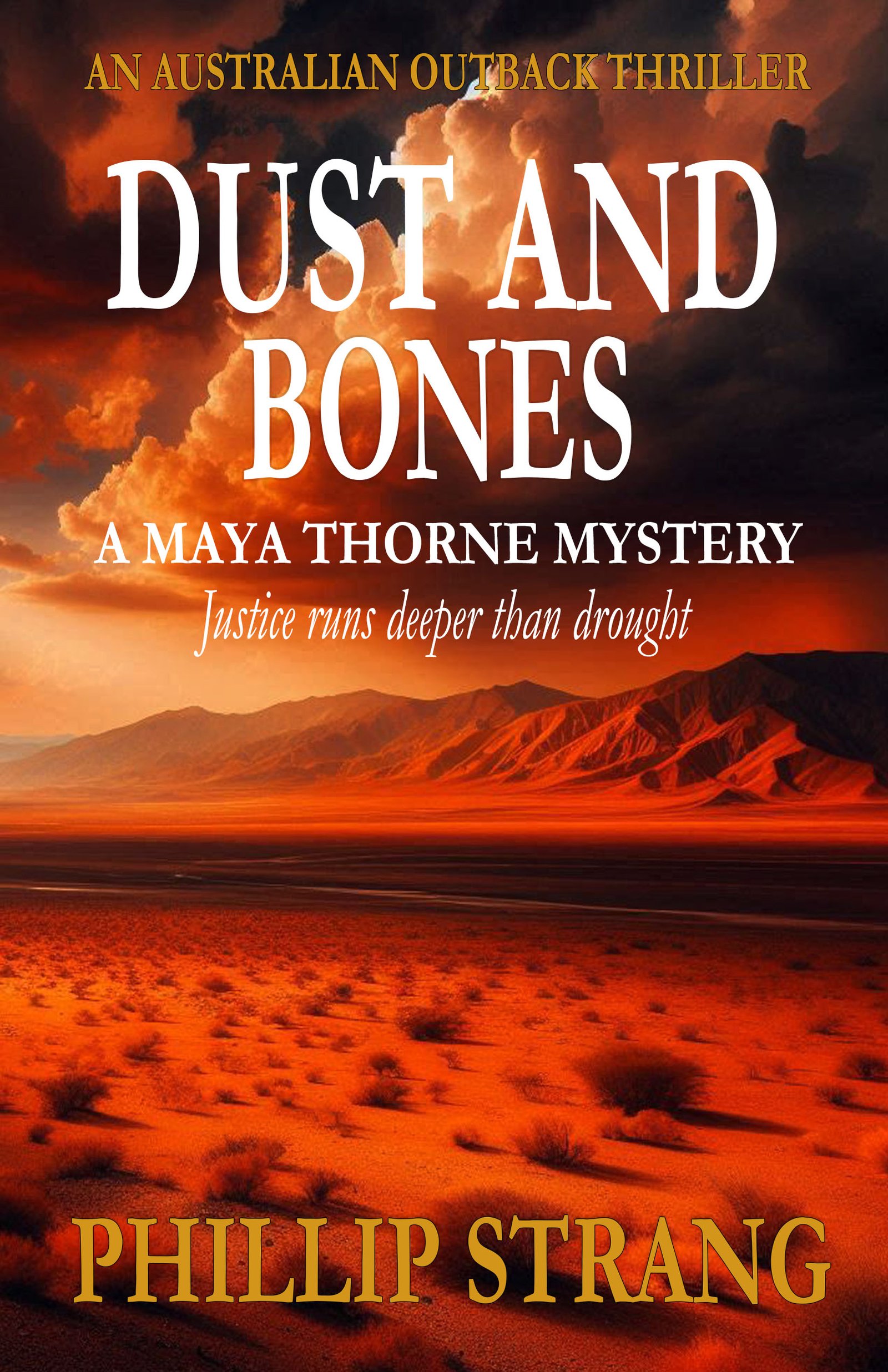
A MAYA THORNE MYSTERY
Get Dust and Bones Free
Justice runs deeper than drought.
Red dust. Shallow graves. A detective who hunts killers where the law runs thin and the nearest help is two hundred miles away.
Send Me the BookYou'll also receive occasional new release emails. Unsubscribe anytime. No spam, ever.
As an Amazon Associate, Phillip Strang earns from qualifying purchases. This page contains affiliate links — buying through them costs you nothing extra.