
Sydney presents unique challenges for procedural writers that go far beyond dropping in a few harbour views and calling it authentic. The city’s sprawling geography, from the glittering CBD towers to the western suburbs’ industrial heartland, demands careful navigation to avoid the tourist-brochure trap that reduces Australia’s largest city to postcards.
Across eighteen series and more than 150 novels, I have found that Sydney’s criminal ecosystem operates differently from London’s tight boroughs or New York’s grid system. The harbour city’s crime flows along invisible lines of influence, geography, and class that most writers completely miss.
Understanding Sydney’s Criminal Geography
Sydney’s crime patterns follow the city’s natural and economic divisions. The eastern suburbs’ white-collar corruption connects directly to the western suburbs’ street-level drug trade through corridors most visitors never see. Kings Cross might grab headlines, but the real action happens in places like Bankstown, Parramatta, and the industrial zones around Port Botany.
In my Campbell series, I deliberately avoided the obvious harbour backdrop for most scenes. Real Sydney police work happens in shopping centre car parks in Blacktown, not beneath the Harbour Bridge. The city’s vastness means jurisdiction battles between local area commands, and these territorial disputes create natural conflict for procedural writers willing to dig deeper than the tourist map.
The mistake too many writers make is treating Sydney like a larger version of Melbourne or a sun-soaked London. Sydney’s geography is fundamentally different. The harbour doesn’t just divide north and south; it creates distinct criminal ecosystems. North Shore crime tends toward financial fraud and domestic violence behind manicured hedges. South of the harbour, you’re dealing with organised crime networks that stretch from the CBD’s corporate towers to the housing estates of south-west Sydney.
Capturing Sydney’s Police Culture
NSW Police operates differently from other Australian forces, and these differences matter for authenticity. The command structure reflects Sydney’s size and complexity. Local Area Commands handle routine work, but serious crime gets kicked up to specialist squads based at Police Centre or the newer facilities in Parramatta.
Sydney cops develop a particular attitude shaped by the city’s relentless pace and media scrutiny. They’re more politically aware than their country counterparts, more cynical about media manipulation, and more conscious of how investigations play in the press. The Royal Commission into Police Corruption in the 1990s still casts shadows over procedural work, creating layers of oversight and caution that impact how cases develop.
This political awareness creates opportunities for procedural writers. Your detective characters can’t operate in isolation from media pressure, community expectations, and the ever-present possibility that political connections might derail an investigation. These external pressures should drive plot complications, not just provide background colour.
How I Approach Sydney Settings
When writing Sydney-based crime, I start with the crime type and work backward to location. Financial fraud belongs in the CBD’s glass towers or the professional services districts in North Sydney. Drug manufacturing fits the industrial areas around Botany or the semi-rural fringes in the Hills District. People trafficking runs through the multicultural corridors of western Sydney where new arrivals blend invisibly into established communities.
I spend considerable time mapping travel routes between locations. Sydney’s traffic patterns affect investigation timing in ways that matter for pacing. A drive from Police Centre to Penrith takes twenty minutes at midnight but can stretch to ninety minutes during peak hour. These constraints force characters to make decisions about priority and resource allocation that create natural tension.
The best Sydney procedurals understand that the city operates on multiple levels simultaneously. Street-level drug dealers in Redfern connect to importers operating from Vaucluse mansions. Bikie gangs in Fairfield have business relationships with white-collar money launderers in Double Bay. Effective procedural writing follows these connections across the city’s social and geographical boundaries, using Sydney’s diversity as a plotting tool rather than just descriptive backdrop.
Common Mistakes in Sydney Crime Writing
The biggest error writers make is geographic tokenism—dropping characters at Circular Quay or Bondi Beach without understanding how these locations function in Sydney’s criminal landscape. Circular Quay is a transport hub where surveillance makes serious crime unlikely, but it’s perfect for quick meetings or handovers. Bondi attracts tourist-focused crime and drug dealing, but serious organised crime operates elsewhere.
Another frequent mistake is treating Sydney’s ethnic communities as exotic backdrop rather than understanding how cultural networks affect crime patterns. Lebanese-Australian organised crime operates differently from Vietnamese drug networks, which function differently from Eastern European fraud syndicates. These differences create distinct investigation approaches, not just flavour text for authentic dialogue.
Writers also consistently underestimate Sydney’s scale. Characters can’t casually drive from Cronulla to Hornsby for a quick interview—that’s a two-hour round trip in good traffic. Poor geography planning creates pacing problems where investigations either drag unrealistically or compress impossibly. When writing police procedural novels, these logistical details matter for maintaining reader credibility.
The weather cliche trap catches many writers. Sydney’s climate affects crime patterns in specific ways that go beyond sun and surf stereotypes. Summer heat drives domestic violence rates higher and pushes drug activity into air-conditioned shopping centres. Winter rain creates visibility problems for surveillance but provides cover for outdoor criminal activity. These seasonal patterns should influence plotting, not just scene-setting description.
Building Authentic Sydney Investigations
Real Sydney investigations involve multiple jurisdictions and agencies more frequently than in smaller cities. Federal Police handle drug importation through Port Botany or Sydney Airport. NSW Crime Commission tackles organised crime networks. Local commands deal with street-level enforcement. Effective procedural plotting exploits these jurisdictional boundaries to create conflict and delay resolution.
Sydney’s media environment also shapes investigations differently. The city supports multiple newspapers, television stations, and radio networks that compete aggressively for crime stories. Leaks happen faster and spread wider than in smaller cities. Political pressure builds more quickly because politicians face immediate media scrutiny. These factors should complicate your detective’s work, not just provide background noise.
The court system’s delays affect case development in ways that matter for series writers. Sydney’s District and Supreme Courts have significant backlogs that can delay trials for months or years. Witnesses disappear, evidence degrades, and political priorities shift while cases wait for hearing dates. These systemic problems create opportunities for criminals to escape justice through persistence rather than legal skill, providing realistic plot complications for ongoing series work.
Conclusion
Sydney police procedurals succeed when writers understand that the harbour city’s criminal landscape operates on continental scales compressed into metropolitan boundaries. The city’s complexity demands respect for authentic detail over scenic description, and success comes from following crime patterns rather than tourist routes.
About Phillip Strang
Phillip Strang is an Australian crime and thriller novelist. Across eighteen series and more than 150 novels, his work spans London police procedurals (DCI Isaac Cook), UK investigations (DI Tremayne), Australian outback crime (Maya Thorne), FBI thrillers (Alex Harlan), Scottish Highland mysteries (DI Sarah Lynch), and espionage (Steve Case). Learn more about Phillip or browse his complete catalogue on Amazon.
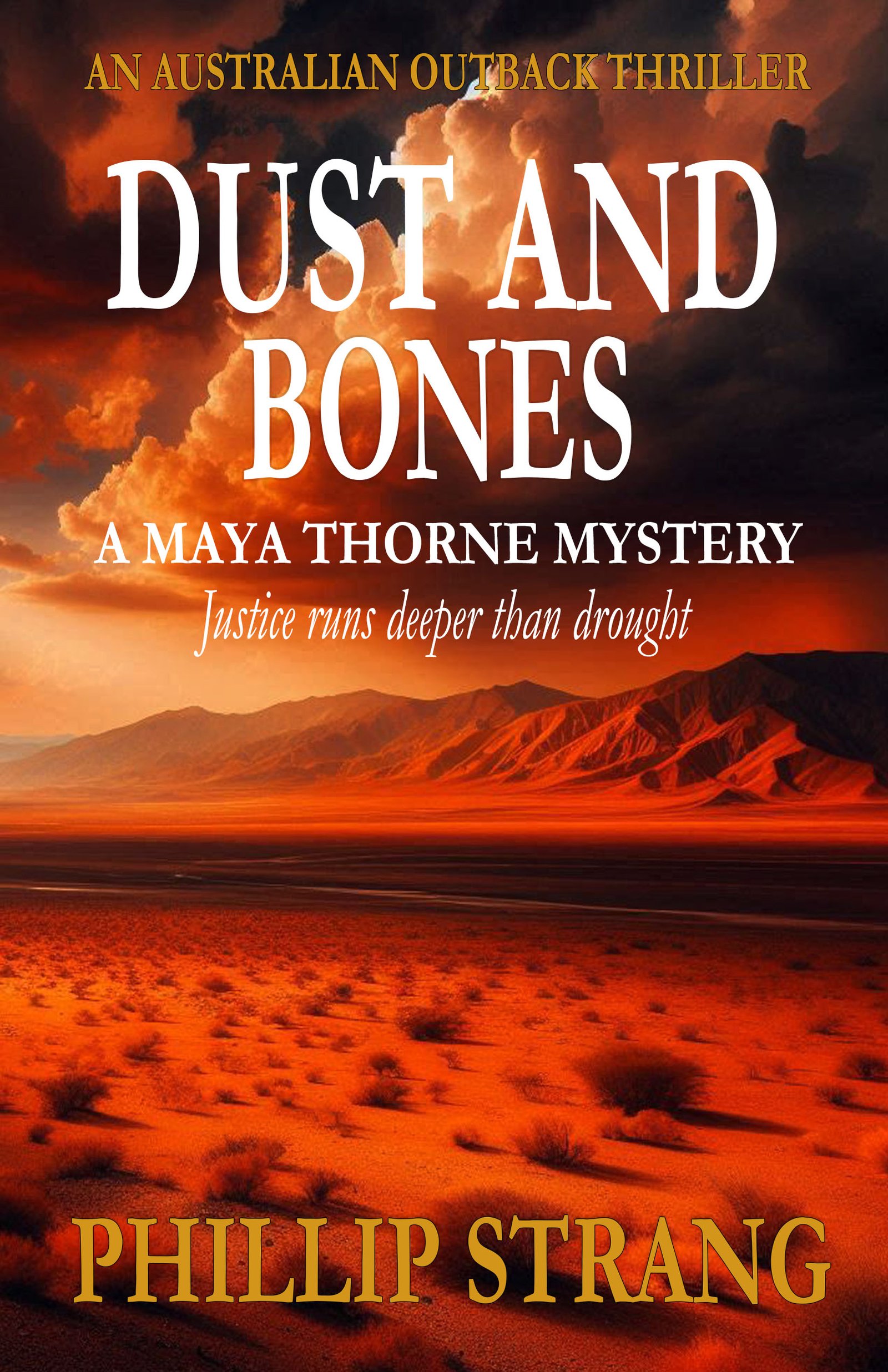
A MAYA THORNE MYSTERY
Get Dust and Bones Free
Justice runs deeper than drought.
Red dust. Shallow graves. A detective who hunts killers where the law runs thin and the nearest help is two hundred miles away.
Send Me the BookYou'll also receive occasional new release emails. Unsubscribe anytime. No spam, ever.
As an Amazon Associate, Phillip Strang earns from qualifying purchases. This page contains affiliate links — buying through them costs you nothing extra.