
Urban Crime Settings: City Structure determines whether your crime novel feels authentic or reads like tourist brochure fiction. The way you map your city’s bones—its districts, transport networks, and social geography—directly impacts plot credibility and character movement. Get the structure wrong, and your detective will be chasing suspects through a geography that makes no sense.
Across eighteen series and more than 150 novels, I’ve found that successful urban crime fiction depends less on atmospheric description than on understanding how a city actually functions. The structure of your urban setting isn’t background—it’s a working component of your plot machinery.
The Geography of Criminal Movement
Criminals don’t move randomly through cities. They follow patterns dictated by transport links, neighbourhood boundaries, and economic zones. Your antagonist fleeing from Mayfair to Hackney in ten minutes during London rush hour isn’t just implausible—it’s lazy writing that signals you don’t understand your setting. In my DCI Isaac Cook series, I spend considerable time mapping realistic travel times between crime scenes because London’s geography constrains and shapes every investigation.
Smart crime writers use city structure to create natural pressure points. Bottlenecks at bridge crossings, dead ends in industrial districts, the social barriers between affluent and working-class areas—these aren’t just scenic details. They’re tactical elements that affect how your characters pursue each other and how crimes unfold. Understanding your city’s flow patterns helps you write chases that feel inevitable rather than convenient.
Economic Districts as Character Drivers
Every city divides itself economically, and these divisions drive character motivation and conflict. The financial district operates differently from the dock areas, which function differently from residential suburbs. Your characters’ backgrounds should reflect these economic realities, and their movements through different districts should carry appropriate social weight.
I learned this lesson writing police procedurals across different urban environments. A detective comfortable in corporate boardrooms might struggle in housing estates, and vice versa. This isn’t about class stereotypes—it’s about how urban economic structure creates genuine barriers and opportunities that affect investigation methods. The best police procedural novels understand that jurisdiction boundaries and economic districts often overlap in ways that complicate law enforcement.
How Urban Crime Settings: City Structure Drives Plot Tension
City structure creates natural escalation points for crime fiction. The journey from suburbs to city centre, the crossing between rival neighbourhood territories, the movement from legitimate business districts to grey-market areas—each transition carries inherent tension. Your plot should exploit these structural tensions rather than ignore them.
Consider how different urban zones operate on different schedules. Financial districts empty at night, entertainment areas peak after dark, industrial zones run skeleton crews on weekends. These rhythms affect witness availability, police response times, and criminal opportunity. Structure your plot to take advantage of these natural variations rather than treating your city as uniformly active at all hours.
My Working Approach to City Mapping
When I establish a new urban setting, I start with transport infrastructure before I write a single scene. How do people actually move between key areas? Where are the chokepoints? What areas become isolated after certain hours? This isn’t academic research—it’s practical plot construction. Your characters need to move believably through space, and their movement patterns should feel logical to readers familiar with urban environments.
I maintain working maps for each series location, marking not just geography but timing, social boundaries, and economic zones. For the Steve Case books, understanding how different urban areas connect helps me write action thriller sequences that feel grounded rather than cartoonish. The Steve Case investigations depend on realistic movement through London’s actual geography, including the limitations that geography imposes on both pursuer and pursued.
Common Urban Setting Mistakes
The worst urban crime fiction treats cities like stage sets where characters can appear anywhere as needed. Authors who write Manhattan geography but set their story in Birmingham, or who move characters across sprawling cities in impossibly short timeframes, destroy suspension of disbelief. Another persistent error involves homogenising urban areas—writing every neighbourhood with identical social dynamics and treating economic districts as interchangeable backdrops.
Many writers also ignore how urban infrastructure affects criminal behaviour. Real criminals understand transport patterns, police deployment, and neighbourhood watch schedules. Your antagonists should demonstrate similar awareness rather than bumbling through city geography. The criminal who chooses escape routes based on actual city structure feels more threatening than one who simply disappears into convenient plot holes.
Conclusion
Urban crime fiction succeeds when city structure serves the story rather than merely decorating it. Master your setting’s geography, and you’ll write crime scenes that feel inevitable rather than arbitrary. Ignore urban structure, and you’ll produce tourist fiction disguised as crime writing.
About Phillip Strang
Phillip Strang is an Australian crime and thriller novelist. Across eighteen series and more than 150 novels, his work spans London police procedurals (DCI Isaac Cook), UK investigations (DI Tremayne), Australian outback crime (Maya Thorne), FBI thrillers (Alex Harlan), Scottish Highland mysteries (DI Sarah Lynch), and espionage (Steve Case). Learn more about Phillip or browse his complete catalogue on Amazon.
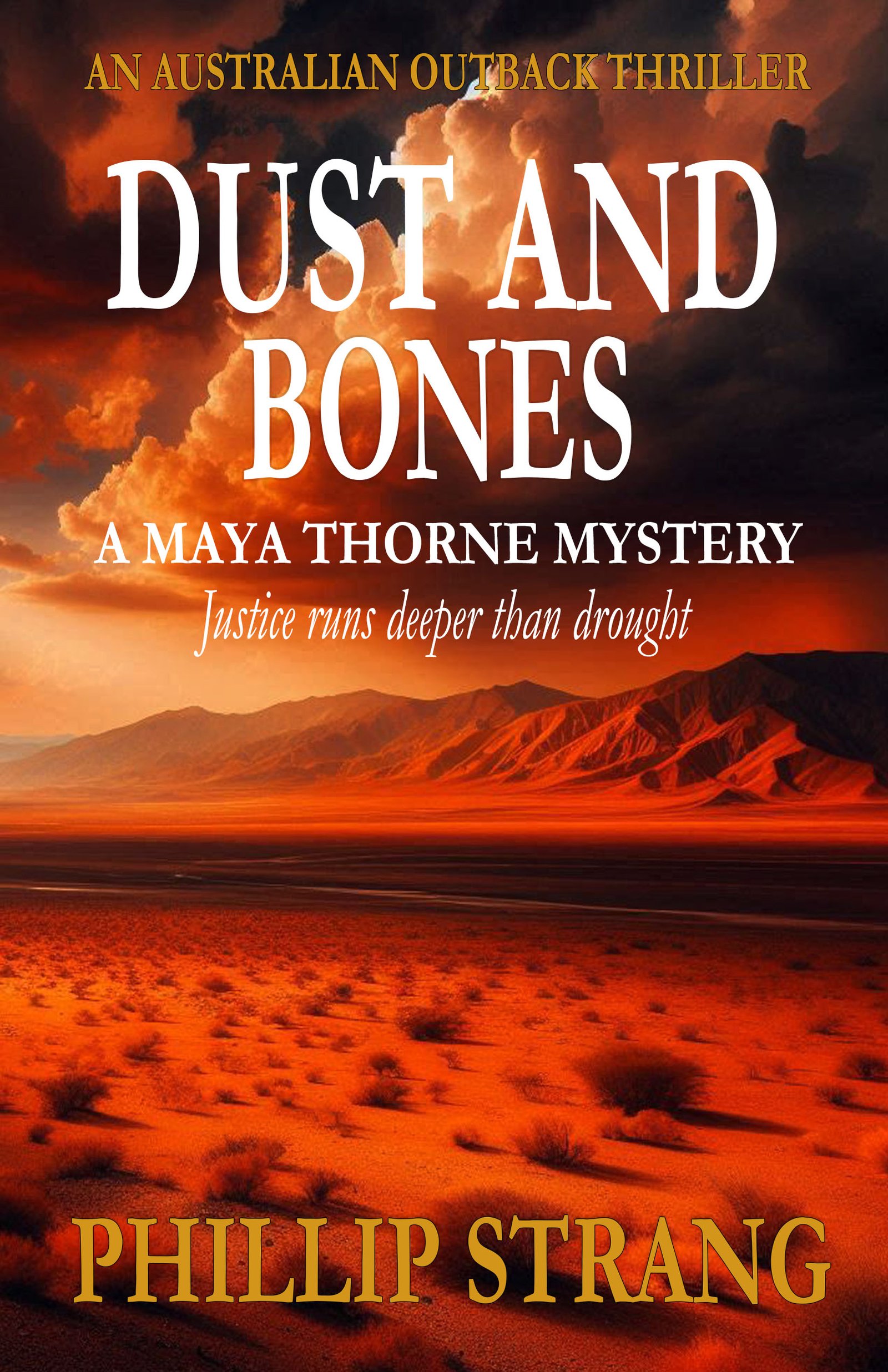
A MAYA THORNE MYSTERY
Get Dust and Bones Free
Justice runs deeper than drought.
Red dust. Shallow graves. A detective who hunts killers where the law runs thin and the nearest help is two hundred miles away.
Send Me the BookYou'll also receive occasional new release emails. Unsubscribe anytime. No spam, ever.
As an Amazon Associate, Phillip Strang earns from qualifying purchases. This page contains affiliate links — buying through them costs you nothing extra.