
Detective duos represent one of crime fiction’s most enduring partnerships, yet the craft of parallel characterisation remains one of its most misunderstood challenges. Too many writers assume that pairing two investigators automatically generates compelling tension, when in reality, successful detective partnerships require deliberate architectural choices that serve both plot mechanics and character revelation.
The fundamental question isn’t whether your detectives complement each other, but whether their individual trajectories create meaningful friction that drives investigation forward. Across eighteen series and more than 150 novels, I have found that the most effective detective duos operate as narrative engines where each character’s limitations force the other into unexpected territory, creating investigative momentum that neither could achieve alone.
The Architecture of Investigative Opposition
Successful detective duos function on the principle of productive opposition rather than comfortable partnership. This doesn’t mean constant bickering or manufactured conflict, but rather fundamental differences in approach that generate investigative possibilities. One detective’s blind spot must be the other’s strength, creating a natural push-pull dynamic that opens cases from multiple angles simultaneously.
In my police procedural work, I’ve found that the most compelling partnerships emerge when each detective brings distinct investigative philosophies that clash productively. Isaac Cook’s methodical, evidence-based approach gains dramatic tension when paired with colleagues who favour intuitive leaps or unconventional methods. The key is ensuring these differences serve the investigation rather than merely providing personality contrast.
The mistake many writers make is creating partners who are too similar or too different. Partners who think alike remove investigative tension, while those who are completely incompatible waste narrative energy on interpersonal drama that doesn’t advance the case. The sweet spot lies in detectives who share professional competence but approach problems from fundamentally different angles.
Parallel Character Arcs Within Serial Structure
When writing detective duos across multiple books, parallel characterisation requires careful management of individual growth trajectories that remain interconnected but never identical. Each partner must evolve independently while their relationship deepens, creating layered storytelling that rewards long-term readers without alienating newcomers.
The challenge lies in preventing one character from overshadowing the other across a series. I’ve observed that the most successful approach involves alternating which detective drives each investigation’s emotional core while ensuring both remain essential to its resolution. This prevents the partnership from becoming lopsided while maintaining distinct character voices.
Serial detective duos also allow for exploration of how professional partnerships change over time. Early books might focus on establishing trust and working methods, while later entries can explore how shared experiences create almost telepathic understanding. This evolution must feel organic rather than forced, emerging naturally from accumulated case experiences.
Dialogue as Investigative Mechanism
Detective duo dialogue serves multiple functions beyond character revelation. Every conversation between partners should either advance the investigation, reveal character, or establish their working dynamic. The best detective partnerships use dialogue as a thinking-aloud process where each detective’s questions force the other to articulate hunches or challenge assumptions.
This investigative dialogue differs fundamentally from exposition. Instead of one detective explaining facts to another, both should be actively processing information together, with their different perspectives generating new insights. When Isaac Cook discusses cases with colleagues, their conversations become investigative tools where competing theories are tested and refined through debate.
The rhythm of detective duo dialogue also establishes their working relationship. Short, clipped exchanges suggest professional efficiency, while longer discussions indicate deeper partnership. Writers must be conscious of these rhythmic choices, as they communicate relationship dynamics more effectively than explicit description.
How I Approach Partnership Dynamics
When developing detective partnerships, I start by identifying each character’s investigative weakness and ensuring their partner’s strength addresses that gap. This creates natural interdependence that serves plot function while building character relationship. I then establish their communication patterns early, showing how they share information, challenge each other’s assumptions, and divide investigative labour.
I avoid the mentor-student dynamic unless it’s specifically relevant to the story, as it creates inherent imbalance that can undermine partnership equality. Instead, I prefer partnerships where both detectives bring equivalent but different expertise to investigations. This maintains mutual respect while creating opportunities for each to shine.
The practical reality of writing detective duos means tracking two character arcs simultaneously while ensuring they intersect meaningfully with plot progression. I maintain separate character notes for each detective, documenting their individual growth alongside their partnership development. This prevents one character from becoming merely reactive to their partner’s initiatives.
Common Partnership Pitfalls
The most frequent mistake in detective duo writing is creating partnerships that exist primarily for banter rather than investigative necessity. When partners spend more time trading quips than solving crimes, the relationship becomes decorative rather than functional. Detective duos work best when their partnership directly enhances their ability to solve cases.
Another common error involves making one detective consistently correct while the other provides comic relief or serves as sounding board. This destroys partnership equality and reduces one character to sidekick status. Even when detectives have different experience levels, both must contribute meaningfully to case resolution.
Writers also frequently mistake personality differences for character development. Having one detective who likes coffee while the other prefers tea doesn’t create compelling partnership dynamics. Meaningful differences must emerge from investigative philosophy, personal history, or fundamental worldview rather than surface preferences.
The tendency to create partnerships based on demographic differences rather than investigative complementarity also weakens detective duos. While diversity in detective partnerships can provide valuable perspectives, the pairing must be justified by professional logic rather than representation goals alone. Strong crime fiction requires characters who feel essential to their stories rather than inserted to meet external criteria.
Balancing Individual Agency
Perhaps the greatest challenge in detective duo writing involves maintaining each character’s individual agency while building their partnership. Both detectives must be capable of independent action and decision-making, even when working together. This prevents the partnership from feeling artificially constraining while creating opportunities for dramatic tension when their approaches diverge.
The key lies in ensuring that partnership enhances rather than limits each detective’s capabilities. When working together makes both characters more effective than they would be separately, the relationship feels necessary rather than convenient. This requires careful plotting that creates situations where both detectives’ skills are essential to case resolution.
Successful detective duos also allow for temporary separation without destroying narrative momentum. Each detective must be capable of carrying scenes independently, maintaining their distinct voice and investigative approach even when apart. This independence strengthens their partnership by making it a choice rather than a narrative necessity.
Conclusion
Detective duos succeed when they function as investigative engines rather than merely character relationships, with each partner’s limitations creating opportunities for the other to drive the case forward. The craft lies in building productive opposition that serves both plot mechanics and character development, creating partnerships that feel both professionally logical and dramatically compelling.
About Phillip Strang
Phillip Strang is an Australian crime and thriller novelist. Across eighteen series and more than 150 novels, his work spans London police procedurals (DCI Isaac Cook), UK investigations (DI Tremayne), Australian outback crime (Maya Thorne), FBI thrillers (Alex Harlan), Scottish Highland mysteries (DI Sarah Lynch), and espionage (Steve Case). Learn more about Phillip or browse his complete catalogue on Amazon.
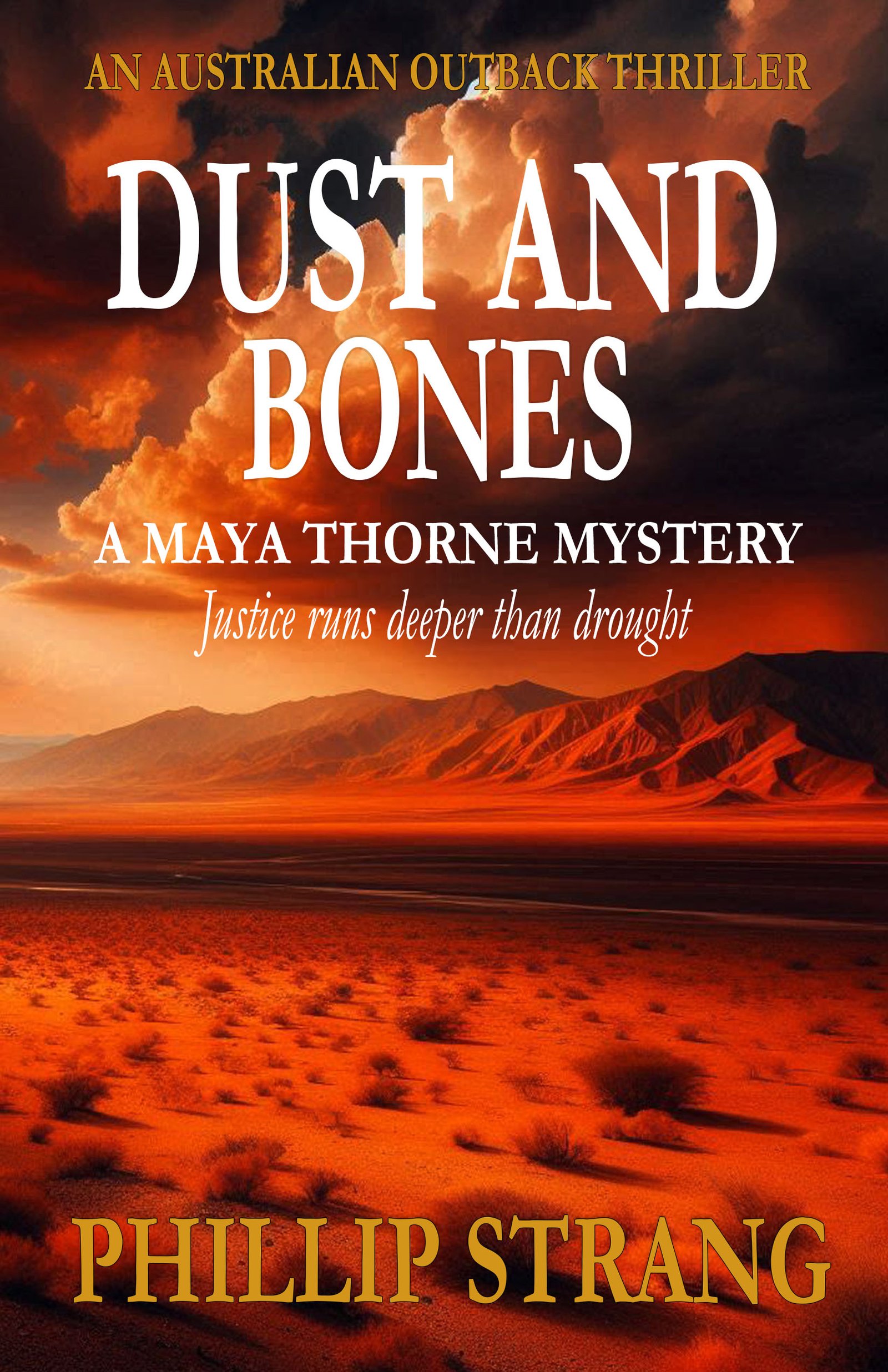
A MAYA THORNE MYSTERY
Get Dust and Bones Free
Justice runs deeper than drought.
Red dust. Shallow graves. A detective who hunts killers where the law runs thin and the nearest help is two hundred miles away.
Send Me the BookYou'll also receive occasional new release emails. Unsubscribe anytime. No spam, ever.
As an Amazon Associate, Phillip Strang earns from qualifying purchases. This page contains affiliate links — buying through them costs you nothing extra.