
The question of outline detail haunts crime writers more than any other genre practitioner, and for good reason. Unlike literary fiction where characters can meander through emotional landscapes, crime fiction demands precision in plotting, clue placement, and revelation timing. Too little detail and you’ll write yourself into impossible corners; too much and you’ll strangle the organic discoveries that make both writing and reading compelling.
Across eighteen series and more than 150 novels, I’ve found that the sweet spot lies not in a single approach, but in calibrating your outline density to match both your natural writing process and the specific demands of your subgenre. A psychological thriller requires different scaffolding than a police procedural, and what works for your first novel may suffocate your fifteenth.
The Skeleton Versus Blueprint Spectrum
Crime fiction outlines exist on a spectrum from skeletal frameworks to architectural blueprints. The skeleton approach gives you victim, perpetrator, motive, and key turning points—perhaps a dozen bullet points for an entire novel. The blueprint method details every scene, subplot, clue placement, and character revelation across thirty or forty pages of notes.
Neither extreme serves most writers well. Skeletal outlines work for experienced authors who’ve internalized genre mechanics, but they’re death traps for newcomers who haven’t yet developed the instinct for police procedural pacing or thriller escalation. Blueprint outlines provide security but often result in mechanical prose where every surprise has been drained from the writing process.
The optimal approach lies in what I call the ‘structured flexibility’ method—detailed enough to prevent major structural failures, loose enough to accommodate the discoveries that emerge during actual writing. This means knowing your crime, your criminal, and your investigative arc while leaving room for the unexpected connections and character revelations that make the writing process alive.
Genre-Specific Outline Requirements
Different crime subgenres demand different outline approaches, and ignoring this reality leads to structural problems that revision cannot fix. Cozy mysteries can function with lighter outlines because their focus on character relationships and community dynamics allows for more organic development. Hard-boiled detective stories require more detailed plotting because their cynical worldview demands carefully orchestrated revelations about corruption and moral compromise.
Psychological thrillers need the most detailed character work in their outlines—not plot mechanics, but emotional architecture. You must know not just what your unreliable narrator will reveal, but why they’re concealing it and how their psychological state will deteriorate or evolve. Action thrillers require precise escalation planning, with each set piece building logically from the previous while maintaining plausible stakes.
Police procedurals occupy a middle ground. When I developed the DCI Isaac Cook series, I discovered that too much detail in the investigative process killed the authenticity—real police work involves false starts and dead ends that over-planned outlines eliminate. The outline needs to track evidence and witness interviews without predetermining every investigative conversation.
My Working Method: Controlled Chaos
My actual outlining process has evolved through necessity rather than theory. I begin with what I call the ‘crime triangle’—victim, perpetrator, and the specific circumstances that brought them into fatal collision. This isn’t just who killed whom, but why this particular murder happened to these particular people at this particular moment.
From there, I work backward and forward simultaneously. Backward to establish the history and relationships that made the crime inevitable; forward to determine how the investigation will unfold. I don’t plan every scene, but I identify what I call ‘anchor points’—specific moments where crucial information must be revealed or key character decisions must be made.
For my Maya Thorne outback crime series, the isolation of the Australian setting demanded more detailed logistics planning. When your nearest backup is three hours away, every investigative choice carries different weight. The outline had to account not just for clues and suspects, but for the practical realities of conducting investigations in remote locations.
The key insight is that outlines should function as navigation tools, not rigid blueprints. They exist to prevent you from writing yourself into impossible situations while preserving the discovery process that keeps writing engaging. I want to know where I’m going without predetermining every step of the journey.
Common Mistakes That Kill Momentum
The most destructive outlining mistake I see in crime fiction is what I call ‘reveal scheduling’—planning exactly when each clue will be discovered and each suspect eliminated. This creates mechanical pacing where information dumps occur at predictable intervals rather than emerging naturally from character actions and investigative logic.
Equally problematic is the tendency to over-outline character conversations, particularly interrogation scenes. Sketching the purpose of an interview and what information needs to emerge is useful; scripting the dialogue in advance kills the authenticity that comes from characters responding to each other in real time. When I started the Steve Case espionage series, my early outlines included too much operational detail that left no room for the improvisational thinking that defines effective field work.
Another common trap is outlining the investigation from the detective’s perspective without adequately considering the criminal’s actions throughout the timeline. Your murderer doesn’t disappear after committing the crime—they’re reacting to the investigation, covering tracks, perhaps escalating to protect themselves. The outline needs to track both sides of this cat-and-mouse dynamic.
The reverse problem occurs when writers outline elaborate criminal schemes but fail to plan realistic investigative responses. If your detective would obviously pursue a particular lead, your outline must account for what they’ll discover. You cannot simply ignore logical investigative steps because they’re inconvenient to your preferred plot progression. This is where many noir crime thrillers fail—the atmosphere is compelling, but the investigative logic collapses under scrutiny.
When to Deviate From Your Outline
The outline serves the story, never the reverse, but knowing when to deviate requires experience and judgment. Character revelations that emerge during writing often improve upon your original conception, but they must be tested against the structural requirements of crime fiction. If your detective develops an unexpected personal connection to the case, this can deepen the emotional stakes—but it cannot contradict established evidence or undermine the logical foundation of your mystery.
Similarly, if you discover a more compelling motive during the writing process, you can adjust accordingly, but the change must be reconciled with your established timeline and evidence pattern. I’ve learned to view such discoveries as opportunities rather than problems, provided they strengthen rather than complicate the core mystery.
The crucial skill is distinguishing between productive deviations that enhance your story and self-indulgent tangents that dilute your central crime. If the change makes your mystery more interesting or your characters more compelling while maintaining logical consistency, embrace it. If it exists primarily because you’ve grown bored with your original conception, resist the temptation unless you’re willing to restructure your entire outline to accommodate the new direction.
Conclusion
The right outline density for crime fiction is the minimum amount of structure necessary to prevent major plotting disasters while preserving maximum space for organic discovery. This balance shifts based on your experience, your subgenre, and your natural writing process, but the principle remains constant: outline enough to avoid dead ends, not so much that you eliminate the excitement of the journey.
About Phillip Strang
Phillip Strang is an Australian crime and thriller novelist. Across eighteen series and more than 150 novels, his work spans London police procedurals (DCI Isaac Cook), UK investigations (DI Tremayne), Australian outback crime (Maya Thorne), FBI thrillers (Alex Harlan), Scottish Highland mysteries (DI Sarah Lynch), and espionage (Steve Case). Learn more about Phillip or browse his complete catalogue on Amazon.
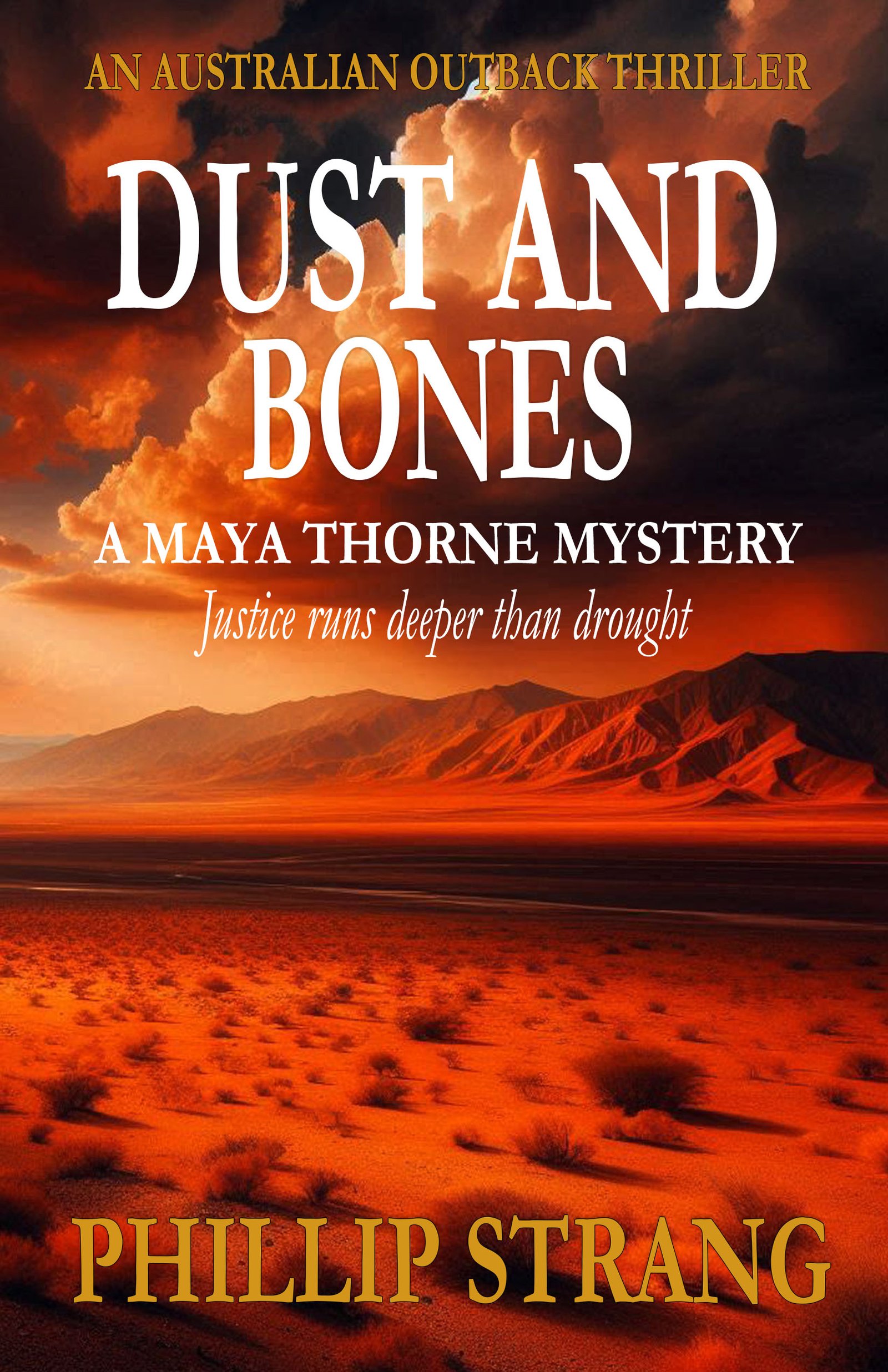
A MAYA THORNE MYSTERY
Get Dust and Bones Free
Justice runs deeper than drought.
Red dust. Shallow graves. A detective who hunts killers where the law runs thin and the nearest help is two hundred miles away.
Send Me the BookYou'll also receive occasional new release emails. Unsubscribe anytime. No spam, ever.
As an Amazon Associate, Phillip Strang earns from qualifying purchases. This page contains affiliate links — buying through them costs you nothing extra.