
The fundamental tension in writing historical crime fiction settings lies not in gathering research, but in knowing how much of that research to actually use. Every detail you’ve uncovered about Victorian London’s sewer systems or 1920s police procedures feels essential, yet your reader picked up a crime novel, not a history textbook.
Across eighteen series and more than 150 novels, I’ve found that the most common failure in historical crime fiction isn’t insufficient research—it’s the inability to trust that less can be more. The craft lies in creating an authentic historical atmosphere while maintaining the pace and tension that crime fiction demands.
The Iceberg Principle of Historical Research
Your research should function like an iceberg: ninety percent remains invisible, supporting the ten percent your readers actually see. When I developed the historical elements for certain police procedural novels, I spent weeks understanding period forensics, but readers only encounter this knowledge through what my detective can and cannot do, not through exposition about the limitations of 1950s fingerprint analysis.
The depth of your research shows not in how much you tell, but in how confidently you can have your characters move through their world. A Victorian detective who automatically checks for train schedules, knows which neighborhoods have gas lighting, or understands the social implications of a woman traveling alone—these details emerge from extensive research but appear as natural character behavior, not historical lectures.
The key is developing what I call ‘period instinct’—researching so thoroughly that you intuitively know what belongs and what doesn’t. This allows you to write with the confidence that breeds reader trust, even when you’re not explicitly demonstrating your knowledge.
How I Actually Approach Historical Settings
My research process begins with the crime, not the history. I identify the specific investigative and procedural elements my plot requires, then research backwards from there. If my story needs a particular type of evidence analysis, I research what was possible in that era, what wasn’t, and how those limitations might create plot complications or opportunities.
I create what I call a ‘period constraint map’—a document outlining what my characters cannot do, know, or access. These limitations often generate the most interesting plot developments. A detective in 1890s London cannot simply run fingerprints through a database, so how does he identify a repeat offender? These constraints force creative solutions that feel both historically authentic and dramatically satisfying.
For atmosphere, I focus on the sensory details that immediately signal period without requiring explanation. The sound of hooves on cobblestones, the smell of coal smoke, the weight of particular fabrics—these create instant historical context while advancing the scene. I avoid the temptation to explain why these details matter historically; I let them do their atmospheric work and move on.
Reader Patience and the Momentum Problem
Crime fiction readers have a particular relationship with pacing that historical fiction readers might tolerate differently. In action thriller novels, momentum is everything, and this principle applies even when your thriller is set in 1847. Your readers want to solve the mystery, catch the killer, or uncover the conspiracy—they don’t want a graduate seminar on period social customs.
The most dangerous trap is what I call ‘research pride’—the compulsion to show off everything you’ve learned. You’ve spent months understanding the complexities of Victorian social hierarchies, so surely your readers need to understand them too. Wrong. They need to feel the impact of those hierarchies on your plot and characters, but they don’t need the historical lecture.
Test every historical detail against this question: does this advance the crime story, or does it advance my need to demonstrate research? If it’s the latter, cut it or find a way to weave it into action, dialogue, or character development. A paragraph explaining the class implications of servants’ entrances stops your story dead. A scene where your detective uses his knowledge of servants’ entrances to catch a suspect unaware—that’s historical detail serving story.
Consider your reader’s cognitive load. They’re tracking suspects, motives, clues, red herrings, and plot developments while simultaneously absorbing historical context. Every unnecessary period detail adds to that load without advancing their primary interest: solving the crime.
Common Research Mistakes That Kill Historical Crime Stories
The most frequent error I see is front-loading historical exposition. Writers feel compelled to establish their period credentials early, often opening with lengthy descriptions of historical settings or situations. Your first chapter should establish character and conflict, not historical bona fides. A detective arriving at a murder scene in 1920s Chicago should be investigating the crime, not surveying the architectural significance of the neighborhood.
Another killer mistake is treating historical accuracy as absolute rather than dramatic. Yes, research matters, but you’re writing fiction, not documentary. If the historical record shows that a particular forensic technique wasn’t developed until 1923, but your story is set in 1922 and dramatically requires that technique, consider whether creative license serves your story better than rigid accuracy. Crime fiction has always taken liberties with procedural realities for dramatic effect.
The anachronism trap catches many writers who research broadly but not specifically. You might understand the general social conditions of your chosen period while missing specific details that matter to crime fiction. Police procedures, legal systems, and investigative techniques often lagged behind or advanced ahead of general social changes. A character might have access to modern telegraph systems while still being bound by medieval legal procedures.
Dialogue presents its own historical challenges. Period-appropriate speech patterns can quickly become unreadable or pretentious. In my experience with espionage thrillers set in different eras, I aim for dialogue that suggests historical period without reproducing it exactly. Avoid modern slang and concepts, use slightly more formal sentence structures, but don’t force your readers to decipher archaic grammar to follow conversations.
Making Historical Details Work for Crime Fiction
The most effective historical details in crime fiction are those that create opportunities or obstacles for your investigator. Period limitations on communication, transportation, or technology can heighten tension and force creative problem-solving. A detective who cannot simply phone for backup, run license plates through a computer, or access forensic labs must rely on different skills and resources.
Use historical context to raise the stakes. Social attitudes of different periods can make certain crimes more or less serious, certain victims more or less sympathetic, certain investigative approaches more or less acceptable. A female victim in a Victorian setting faces different social prejudices than she would in a 1960s setting, and these prejudices can complicate your detective’s investigation in dramatically useful ways.
Period-specific expertise can become a character strength rather than just atmospheric detail. A detective who understands nautical terminology, industrial processes, or social customs of his era has investigative tools that feel natural to the setting while advancing the plot. This expertise emerges organically from character background rather than research exposition.
Conclusion
The craft of writing historical crime fiction settings ultimately comes down to serving two masters: historical authenticity and crime fiction momentum. The writers who succeed learn to make their research invisible, allowing it to inform every aspect of their story while never overwhelming the central mystery that brought readers to the book in the first place.
About Phillip Strang
Phillip Strang is an Australian crime and thriller novelist. Across eighteen series and more than 150 novels, his work spans London police procedurals (DCI Isaac Cook), UK investigations (DI Tremayne), Australian outback crime (Maya Thorne), FBI thrillers (Alex Harlan), Scottish Highland mysteries (DI Sarah Lynch), and espionage (Steve Case). Learn more about Phillip or browse his complete catalogue on Amazon.
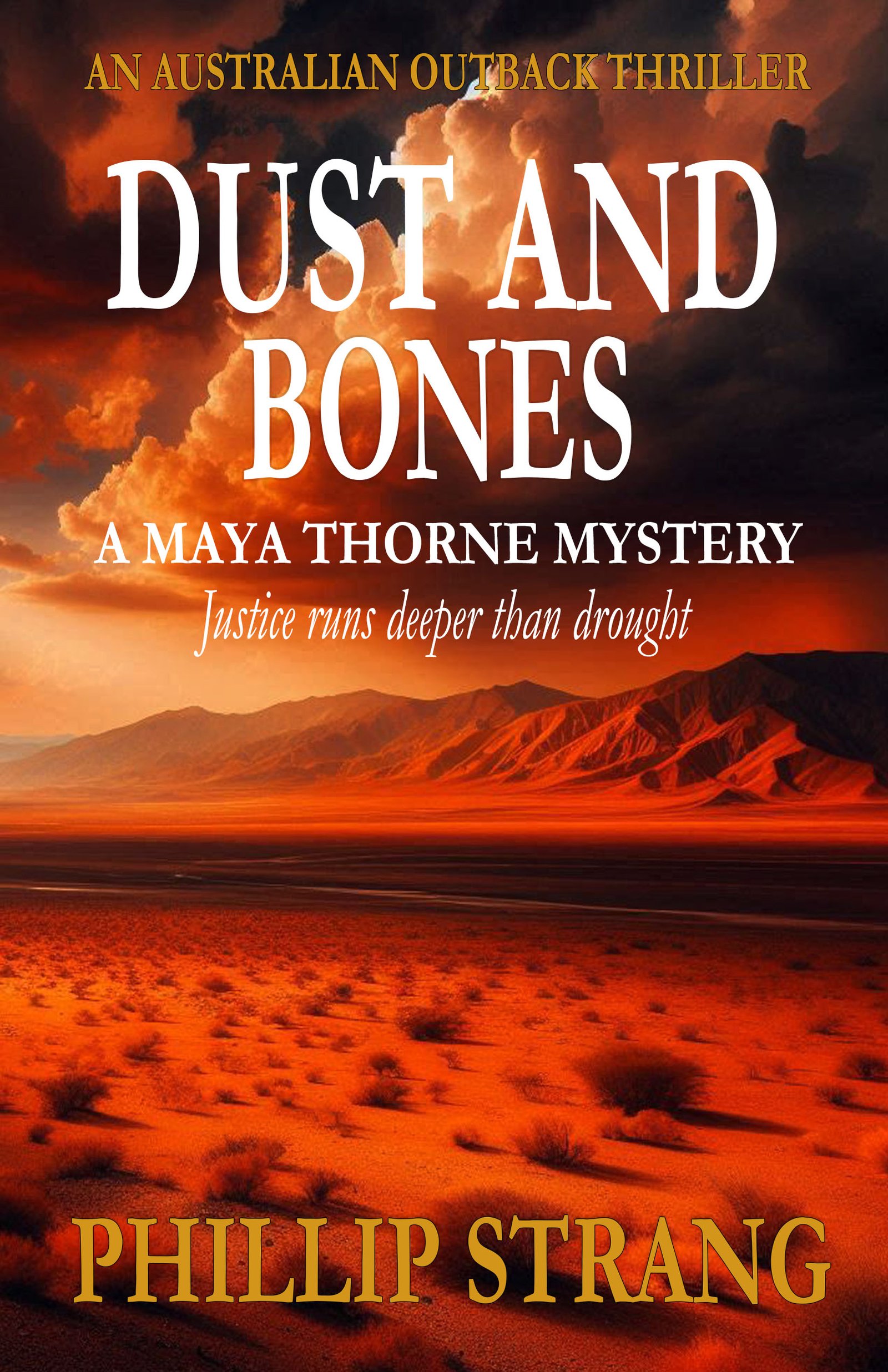
A MAYA THORNE MYSTERY
Get Dust and Bones Free
Justice runs deeper than drought.
Red dust. Shallow graves. A detective who hunts killers where the law runs thin and the nearest help is two hundred miles away.
Send Me the BookYou'll also receive occasional new release emails. Unsubscribe anytime. No spam, ever.
As an Amazon Associate, Phillip Strang earns from qualifying purchases. This page contains affiliate links — buying through them costs you nothing extra.