
The sympathetic killer represents one of crime fiction’s most challenging character archetypes. Creating a murderer who evokes reader understanding while maintaining moral boundaries requires surgical precision in character development and motivation.
Across eighteen series and more than 150 novels, I have found that the most compelling killers are those whose actions we comprehend without endorsing, whose humanity we recognise without absolving their crimes. This delicate balance separates masterful crime fiction from moral confusion.
Understanding Motivation Without Excusing Action
The foundation of a sympathetic killer lies in comprehensible motivation paired with inexcusable execution. Readers must understand the psychological journey that led to murder while never feeling the killer had no alternative. In my police procedural work, I’ve explored killers driven by profound betrayal, terminal illness, or protection of loved ones. These motivations create emotional resonance, but the killer always crosses clearly defined moral lines.
The key distinction lies between explanation and justification. A mother who kills her child’s abuser operates from understandable fury, but the premeditated nature of murder, the choice to bypass legal systems, the calculated disposal of evidence—these elements maintain the character’s position as perpetrator, not victim. The reader thinks ‘I understand why she did it’ rather than ‘she had no choice.’
Building Complexity Through Contradiction
Effective sympathetic killers contain inherent contradictions that mirror real human complexity. They perform acts of genuine kindness alongside calculated cruelty. In developing characters for my Australian outback series, I’ve created killers who rescue injured animals while methodically planning human deaths, or who maintain devoted marriages while eliminating perceived threats to their families.
These contradictions serve a crucial narrative function. They prevent readers from dismissing killers as simply evil while maintaining awareness of their capacity for profound harm. A killer who genuinely loves their children but murders to protect their inheritance creates cognitive dissonance that keeps readers engaged and unsettled. The contradiction forces continuous moral evaluation rather than simple categorisation.
The danger lies in making contradictions too stark or unbelievable. A killer cannot be simultaneously psychopathic and deeply empathetic without careful psychological grounding. Each contradiction must stem from the same core character traits viewed through different circumstances.
My Working Method for Killer Development
When creating sympathetic killers, I begin with their breaking point rather than their crime. Every person has theoretical circumstances that might drive them to murder—the death of a child, terminal diagnosis, complete betrayal by trusted institutions. I identify that breaking point, then construct the specific circumstances that would push this particular character beyond it.
I develop their pre-crime life in detail, establishing relationships, values, and moral boundaries. This character must be someone readers could imagine knowing or being. Then I engineer the specific combination of events, pressures, and opportunities that transforms this relatable person into a killer. The transformation must feel both surprising and inevitable.
For my DI Tremayne series, I developed a killer whose elderly father was systematically abused in a care facility. The character—a devoted son, respected teacher, pillar of his community—reaches his breaking point when authorities dismiss his complaints. His methodical elimination of the care facility staff becomes comprehensible without being excusable. Readers understand his rage while recognising his fundamental moral failure.
Common Mistakes That Destroy Sympathy
The most frequent error involves making killers too sympathetic, crossing into justification territory. When writers pile on excessive trauma, abuse, or circumstantial pressure, they risk creating victims rather than perpetrators. A killer whose actions feel entirely reasonable given their circumstances loses moral complexity and narrative tension.
Another critical mistake lies in retrospective sympathy engineering. Writers sometimes attempt to generate sympathy by revealing tragic backstories after establishing the killer as purely malevolent. This approach feels manipulative and undermines reader trust. True sympathy must be woven throughout the character’s development, not applied as narrative cosmetics.
Equally damaging is the tendency to make sympathetic killers incompetent or reluctant. A killer who botches murders, feels excessive guilt, or attempts half-hearted crimes loses menace and narrative stakes. Sympathetic killers must remain genuinely dangerous. Their competence and determination make them formidable antagonists despite reader understanding.
Some writers also fall into the redemption trap, believing sympathetic killers must ultimately be saved or forgiven. This approach undermines the moral complexity that makes these characters compelling. The most effective sympathetic killers face consequences for their actions regardless of reader understanding or character development.
Maintaining Moral Boundaries
Creating sympathetic killers requires vigilant attention to moral boundaries. Writers must ensure that understanding never slides into endorsement. The killer’s perspective should be comprehensible without becoming the moral center of the narrative. Supporting characters, particularly law enforcement protagonists, must maintain clear ethical positions that anchor the story’s moral framework.
I achieve this balance by ensuring my detective characters, particularly those in thriller narratives, acknowledge the killer’s humanity while never wavering in their commitment to justice. They might express understanding of motivation while remaining dedicated to prosecution. This approach validates reader sympathy while maintaining moral clarity.
The resolution must reflect moral reality. Sympathetic killers might earn reader understanding, even affection, but they cannot escape consequences. Their punishment might be delivered with regret rather than satisfaction, but it must be delivered. Justice served reluctantly carries more emotional weight than justice served eagerly, but it remains justice.
Conclusion
The sympathetic killer succeeds when readers close the book feeling conflicted rather than satisfied, understanding rather than approving. This emotional complexity, achieved through careful character development and moral positioning, elevates character-driven crime fiction from simple good-versus-evil narratives into profound explorations of human nature and moral choice.
About Phillip Strang
Phillip Strang is an Australian crime and thriller novelist. Across eighteen series and more than 150 novels, his work spans London police procedurals (DCI Isaac Cook), UK investigations (DI Tremayne), Australian outback crime (Maya Thorne), FBI thrillers (Alex Harlan), Scottish Highland mysteries (DI Sarah Lynch), and espionage (Steve Case). Learn more about Phillip or browse his complete catalogue on Amazon.
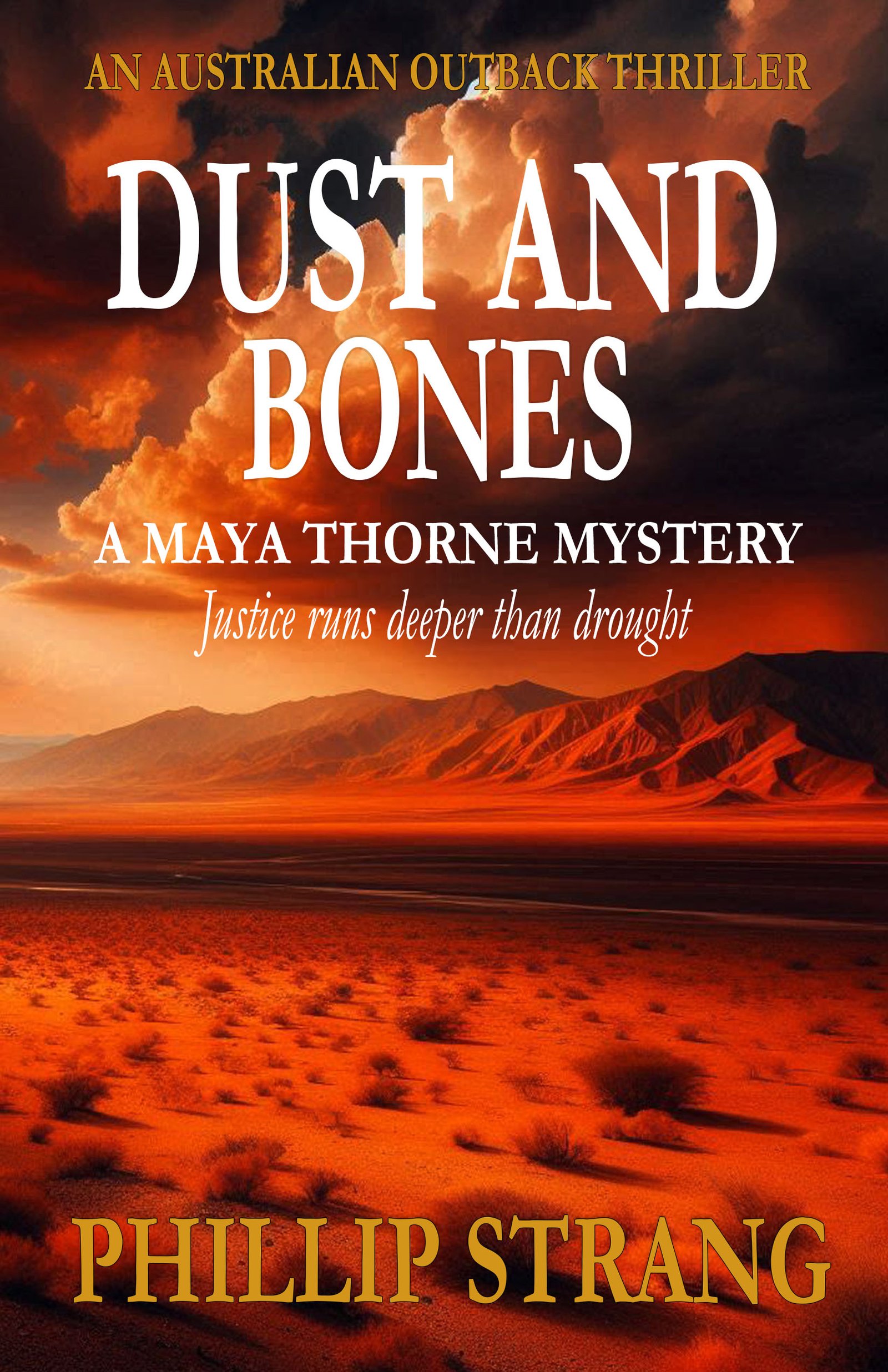
A MAYA THORNE MYSTERY
Get Dust and Bones Free
Justice runs deeper than drought.
Red dust. Shallow graves. A detective who hunts killers where the law runs thin and the nearest help is two hundred miles away.
Send Me the BookYou'll also receive occasional new release emails. Unsubscribe anytime. No spam, ever.
As an Amazon Associate, Phillip Strang earns from qualifying purchases. This page contains affiliate links — buying through them costs you nothing extra.